

























































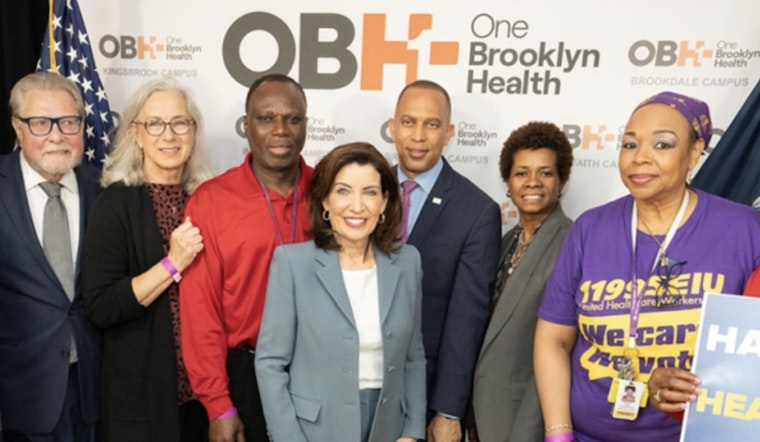
New York Governor Kathy Hochul and House Democratic Leader Hakeem Jeffries are warning of catastrophic healthcare cuts included in a Republican budget reconciliation bill, dubbed "One Big Ugly Bill," which could cost the state an estimated $13.5 billion annually. During a recent gathering with healthcare and labor leaders, Hochul and Jeffries emphasized the ramifications of these cuts for New Yorkers, especially those dependent on programs like Medicaid and food stamps, according to a statement by Governor Hochul's office.
"Republicans in Washington have made it abundantly clear that they are determined to dismantle the social safety net that millions of New Yorkers rely on to secure their basic necessities," Governor Hochul stated in the press release, spotlighting the potential loss of essential services, Governor Hochul reaffirmed her commitment to challenging the proposed measures through litigation and other avenues. According to Jeffries, the Republican budget plan would strip health insurance from 1.5 million New Yorkers to finance tax cuts for the ultra-wealthy, severely straining the state’s healthcare system, with hospitals and nursing homes facing possible closures and Community Health Centers at risk of losing critical funding.
The contentious bill has passed the House of Representatives with backing from New York's Republican Congressional delegation. It proposes severe cuts to Medicaid and the Essential Plan which could result in nearly 1.5 million New Yorkers losing health coverage, and becoming uninsured. "The House bill is a devastating blow to New York's healthcare system that we simply cannot absorb," said New York State Medicaid Director Amir Bassiri in a statement to the Governor’s office. The legislation would strip coverage from more than one million Medicaid enrollees and increase state administrative costs by over 20%.
New York State of Health Executive Director Danielle Holahan conveyed concerns that the House-passed bill could reverse decades of healthier insurance practices in New York, facilitating a situation where almost half of Essential Plan enrollees lose their eligibility. Consequently, hospitals and healthcare providers could see a loss of over $3 billion, largely due to increases in uncompensated care and reduced reimbursements, which according to Kenneth E. Raske, President of the Greater New York Hospital Association, will affect every New York hospital patient, not only the ones on Medicaid.
In addition, the New York State Department of Health has conducted an analysis aimed at clarifying the potential impact of the proposed funding cuts. On the front lines, healthcare professionals such as Michelle Ned, an In-Service Coordinator with 1199SEIU United Healthcare Workers East, have raised alarms about the wide-ranging consequences these cuts could bring, particularly for vulnerable populations. Her comments reflect broader concerns about the serious risks posed by the policy changes in the Republican-backed bill, indicating significant challenges ahead for New York’s healthcare system if the legislation is enacted.



