

























































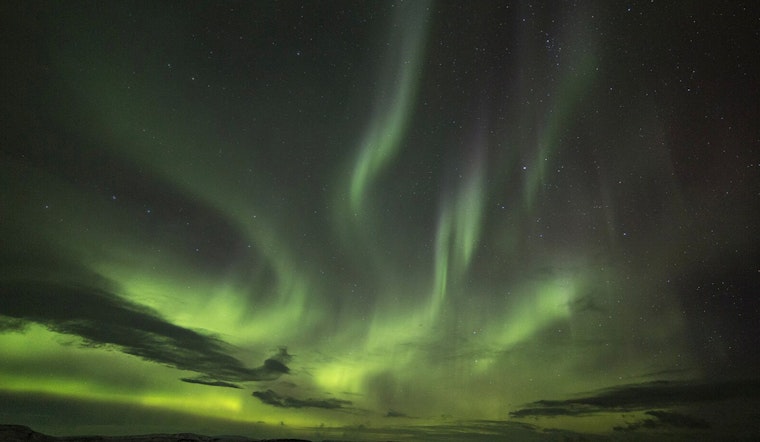
Residents across the D.C. area and as far south as Colorado could be in for a rare celestial show, as a G4 severe solar storm may bring the Northern Lights into view. According to FOX 5 DC, there's more than a 50% chance the Aurora Borealis will be visible tonight, continuing into the early hours of tomorrow. However, the same solar activity fueling this stunning display could also lead to disruptions, including power grid fluctuations and communication system issues.
Farther west, Colorado skies are expected to light up with vibrant shades of green, pink, and purple as a G4 geomagnetic storm pushes farther south, according to the National Oceanic and Atmospheric Administration (NOAA). For the best chance to witness the Northern Lights, viewers should seek out dark, clear skies with little to no light pollution. CBS News Colorado advises that ideal conditions include nighttime visibility, cloud-free skies, and a clear view of the northern horizon.
Last year, on May 10, 2024, an extreme geomagnetic storm afforded global audiences with stunning Northern Lights for several nights. As per WTOP's reporting, the current conditions may not reach that historic intensity, but with 11 solar flares recorded, including one major outburst, and Earth in a direct hit zone, the potential for a memorable display remains high. WTOP cites NOAA's Space Weather Prediction Center, alerting to impacts such as induced currents that could cause voltage problems, intensify induced pipeline currents, and even trigger navigation and communication issues, including erratic GPS service and blackout of high frequency radio.
With clear skies in the forecast, residents in the D.C. area may catch a glimpse of the Northern Lights, according to predictions from the Space Weather Prediction Center. Those equipped with cameras or sharp eyesight could potentially capture the auroras, similar to the sightings seen back in October. The same forecast suggests that while observers in places like Alabama and northern California might have a chance to see the lights, the auroras are more likely to appear over areas farther north in the coming nights—provided the G4 storm activity persists as expected.





