

























































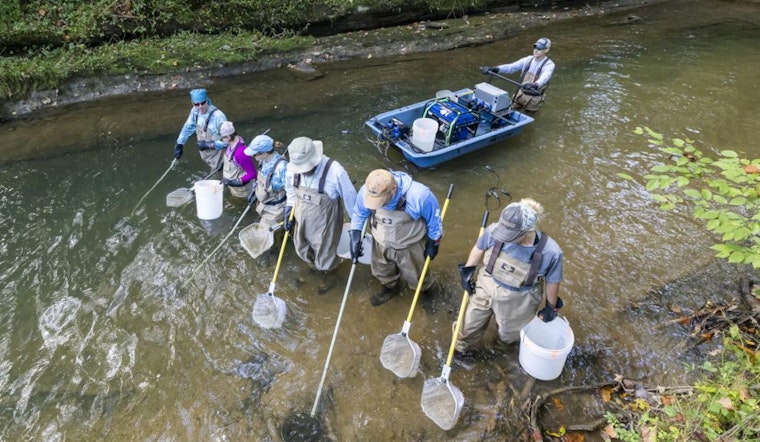
Few endeavors last the test of time, but the Department of Energy's Oak Ridge National Laboratory's Biological Monitoring and Abatement Program (BMAP) stands as a testament to long-term commitment in the field of environmental stewardship. Just recently celebrating its 40th year, BMAP's track record stretches back to the mid-1980s, when it commenced as a means to track the efficacy of environmental cleanup efforts. Yet, to simply monitor isn't to stagnate—the program has since morphed into a respected international model for aquatic biodiversity monitoring and restorative strategies, a pivot that environmentalists the world around have been eager to replicate. As per an anniversary article published by the Oak Ridge National Laboratory, BMAP now stands as a beacon, guiding land managers at DOE and elsewhere across the global landscape.
At its core, BMAP seeks to understand and to act upon the changes seen within fish and invertebrate populations as a reaction to improving water quality. "By studying the changes in fish and invertebrate communities in response to water quality improvements, we gain insights to the impacts of various stressors, including contaminants, on aquatic ecosystems," Teresa Mathews, ORNL’s Biodiversity and Ecosystem Health group lead, stated to Oak Ridge National Laboratory. Spanning an array of scientific disciplines, the initiative's approach is holistic: chemistry, biology, toxicology, geology, physics, and data science—all are integral elements of the BMAP equation.
Decisions surrounding the utilization of DOE lands, including the erection of future-focused facilities like AI-driven data centers and novel energy resources, must be informed as modernity and its demands press against the necessity for sustainability. In this regard, BMAP functions as a critical informational source. By preserving environmental integrity and enabling informed decision-making, it ensures that technological advancement does not overrun ecological balance. "BMAP has enabled new approaches for an important area of science while ensuring the long-term vitality of the federal lands on which we carry out our research," Paul Langan, associate laboratory director for ORNL’s Biological and Environmental Systems Science Directorate, told Oak Ridge National Laboratory.
BMAP's legacy is not just to survey but to significantly push forward in the field of mercury science—having uncovered key genes that enable the conversion of inorganic mercury into more dangerous forms, thus transforming the understanding and potential remediation of this potent neurotoxin. Furthermore, they are to steadily develop new methods and materials for prevention or remediation of mercury's impacts. With a continual innovating spirit, the BMAP team has not shied away from modern approaches such as environmental DNA sampling, robotics, and machine learning to enhance species identification.
The recent anthology of BMAP's work was showcased at a symposium on March 25, where scientists both current and former gathered to discuss the program’s achievements and delve into the latest research efforts. "The meeting was a great opportunity for generations of scientists to meet and discuss how new data collection technologies are expanding our ability to understand biodiversity change in East Tennessee and beyond," Mathews reflected in her conversation with Oak Ridge National Laboratory. For ORNL and DOE's Office of Science, which oversees one of the nation's robust repositories for physical sciences research, the continuation of BMAP's work highlights a balance between cutting-edge science and conscientious environmental management.





