

























































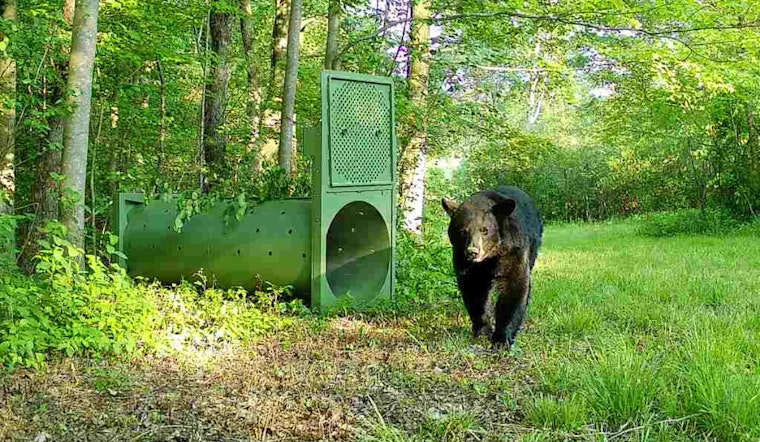
In a significant stride toward understanding the black bear population in Ohio, the ODNR Division of Wildlife has joined forces with the Gantchoff Lab at the University of Dayton to track a female black bear, marking the first time such a creature has been equipped with a GPS collar in the state. Per details shared by the Ohio Department of Natural Resources (ODNR) Division of Wildlife, the study aims to shed light on the expansion patterns of the species within Ohio, particularly its reemergence after a disappearance in the mid-1800s.
Although black bears rank as a rarity in Ohio, recognized as a state-endangered species, the sightings and reports have been on a consistent rise, especially in the northeast and southeast regions of the state, which has piqued the interest of wildlife specialists and enthusiasts alike. These animals have gradually returned to Ohio's habitat, recolonizing from neighboring areas with robust populations, much to the fascination of locals who occasionally catch a glimpse of these elusive creatures. The Division of Wildlife has taken initiative to monitor their movements and interactions within their newfound ranges.
The collaborative effort between the state department and the Gantchoff Lab involves placing a GPS collar on a female black bear located in Ashtabula County, a pioneering act for Ohio. This endeavor is not just a whimsical expedition but a critically scientific one that will help gather essential data on the bears' range, habitat use, and the ecological factors that drive their distribution in an area from where they were once extirpated.
An interesting aspect of this research is the choice to track a female bear, as females are key indicators of a population's health and potential for growth, tracking her movements can reveal information about breeding patterns, cub rearing, and survival rates—it's a fundamental piece of the puzzle that the ODNR Division of Wildlife and the University of Dayton are putting together in an ongoing effort to understand and protect one of Ohio's most mysterious residents, and consistent with the approach adopted by wildlife conservationists across the globe to focus research on female specimens owing to their critical role in population dynamics.





