

























































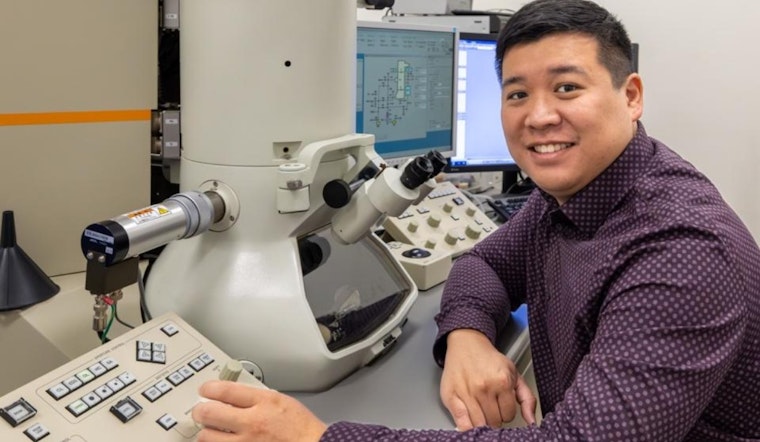
The future of sustainable energy could be getting a significant boost from the latest research into materials that can withstand the extreme conditions of fusion reactors. Oak Ridge National Laboratory (ORNL) scientists are at the forefront of exploring ultra-high-temperature ceramics (UHTCs) for their potential in facing the high heat and radiation inside these powerful energy sources, according to a recent article published in Current Opinion in Solid State & Materials Science, per the Oak Ridge National Laboratory.
Yan-Ru Lin, a materials scientist at ORNL, detailed in the study how UHTCs could take on the role of plasma-facing components due to their extraordinarily high melting points, adjustable thermal conductivity and robust mechanical properties; however, the lab’s research points out, there’s still much to learn about how these materials will handle sustained exposure to both high-energy plasma and intense neutron radiation, challenges that could make or break their application in long-term fusion reactor operations.
With an understanding that improving energy resiliency is a national priority, finding materials capable of withstanding the harsh environment of a fusion reactor is critical. UHTCs offer several benefits over traditional materials, boasting high melting points—above 3,000 degrees Celsius—and promising extended operation in high-temperature environments. These ceramics exhibit resilience to the extreme conditions within fusion reactors, a crucial feature for components that come into direct contact with plasma and endure significant neutron bombardment.
The collaborative effort at ORNL, which includes contributions from the University of Tennessee, Knoxville and Stony Brook University, could redefine the applications of UHTCs by understanding their interaction with neutron irradiation and uncovering paths to enhance their properties, a crucial step forward, given that traditional steels swell at much lower temperatures under such conditions; in contrast, UHTCs are expected to experience volumetric swelling only at temperatures well over 1,000 degrees Celsius, lessening structural integrity concerns overtime.
Funded by the Department of Energy’s Office of Fusion Energy Sciences, the ORNL team’s research doesn't end with just analysis of current materials. They are also looking at multicomponent UHTCs, which could offer advanced oxidation resistance and improved thermal and mechanical properties, key to overcoming some of the radiation and plasma challenges facing current materials in fusion reactors. The pursuit of materials that can survive and thrive in a fusion reactor’s demanding environment is not just scientific ambition—it's a stepping stone towards a potentially transformative energy future.





