

























































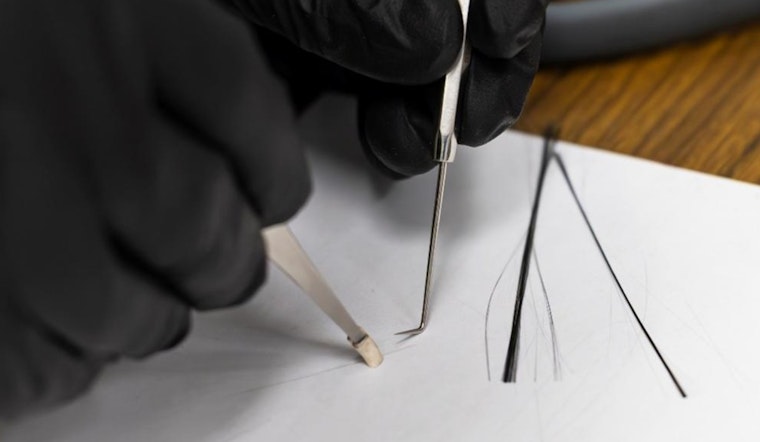
Carbon fiber, pivotal in aerospace and high-performance automotive design for its unrivaled strength and lightness, just got an upgrade thanks to some advanced simulation at the Department of Energy's Oak Ridge National Laboratory (ORNL). Researchers there have utilized molecular dynamics simulations to understand and improve the bonding strength between carbon fiber strands and polymer matrices, as reported by ORNL. The secret lies in adding a reinforcing layer of polyacrylonitrile nanofibers (PAN nanofibers) that redistributes stress more effectively, improving the material's overall integrity.
ORNL's Carbon and Composites group leveraged the formidable Frontier supercomputer to study a 5 million-atom model, analyzing how to make carbon-fiber composites that are not only stronger but also more cost-efficient, which could prove transformational for a variety of applications demanding high-strength and light-weight materials. According to a statement released by ORNL, postdoctoral researcher Tanvir Sohail explained, "When a carbon-fiber composite fails, it typically begins at the interface between the carbon-fiber strands and the polymer matrix," their breakthrough aims to alleviate this weak point by the integration of a layer of PAN nanofibers that enhances the load distribution.
A process called electrospinning played a crucial role; it employs an electric field and a spinning drum, producing PAN nanofibers as tiny as 10 nanometers in diameter. This precision work with nanomaterials typically requires a prodigious amount of computational power and physical experiments, which can be prohibitively expensive in terms of time and resources, that aside from needing a leading-class supercomputer like Frontier, the world’s most powerful supercomputer for open science, they were granted a portion of machine time to work their computational magic.
The collaboration, which included ORNL computational scientist Swarnava Ghosh and a substantial team, settled on modeling PAN nanofibers around 6 nanometers in diameter for optimal performance, as the thinner fibers aligned better at the interface, thereby improving the mechanical strength and enabling more effective stress transfer from the carbon fiber to the polymer, "Simulating materials with 5 million atoms would not have been possible without the power of Frontier," Sohail told ORNL. Armed with these insights, the ORNL team plans to delve deeper, integrating artificial intelligence into their simulations to characterize a broader array of advanced composites.
ORNL is at the forefront of these groundbreaking simulations, with a team that includes researchers Sumit Gupta, Marti Checa, and others. Their work, located within the Oak Ridge Leadership Computing Facility, highlights the intersection of fundamental science and cutting-edge technology. Now boasting a method to augment the resilience of carbon fiber, the scientists aim to apply this knowledge to various materials that are indispensable for industry and modern manufacturing.




