

























































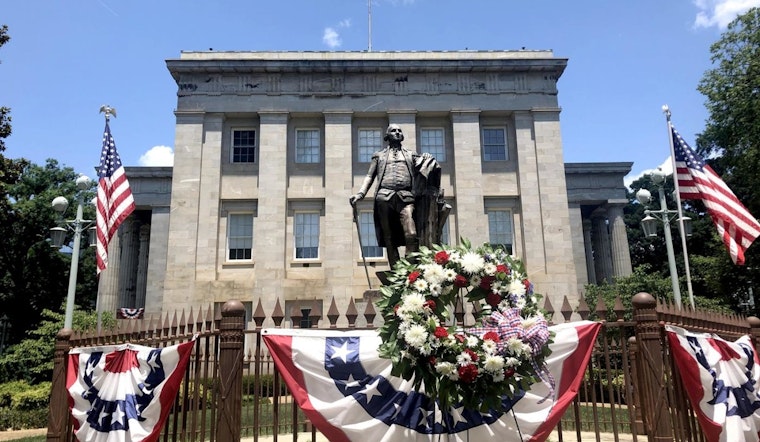
Marking the nation's birthday, Raleigh will again host its familiar Fourth of July celebration at the North Carolina State Capitol with a slew of activities scheduled for families and history buffs alike. The event, set from 11 a.m. to 3 p.m., is free to the public and promises live music, a naturalization ceremony for new citizens, and interactive fun for children, as detailed in a recent announcement by the Department of Natural and Cultural Resources.
The day kicks off with musical entertainment courtesy of the Raleigh Concert Band playing from 11:30 a.m. before giving way to the noon commencement of the main ceremony slated to happen on the east grounds of the Capitol, which will feature the reading from the Declaration of Independence and a wreath laying at the George Washington monument by the Sons of the American Revolution, festivities designed to stir a sense of heritage and pride as new Americans take an oath against the backdrop of historic celebration, a fusion of past and present.
Following the ceremony, the public is invited to step inside the State Capitol for a tour and to view a unique exhibit titled "To Preserve the Blessings of Liberty: State Constitutions of North Carolina." Direct from the State Archives of North Carolina, this single-day display will feature pivotal documents like the 1776 State Constitution and Declaration of Rights, not to mention a noteworthy letter from John Adams.
The State Capitol, a historic edifice dating back to 1840, aims to share and interpret its history, architecture, and function within Union Square and is operated by the N.C. Division of State Historic Sites, acting under the wider umbrella of the Department of Natural and Cultural Resources, as highlighted in their recent press statement; this department is responsible for a broad swath of cultural and natural preserves across the state, from arts commissions to science museums, they manage an array of venues that embody the state's rich tapestry of history and nature.
In a show of commitment to enhancing education, public health, economic development, and community resiliency, the N.C. Department of Natural and Cultural Resources oversees numerous historical sites, museums, parks, and programs — a testament to the value placed upon the state's diverse and vibrant heritage.





