

























































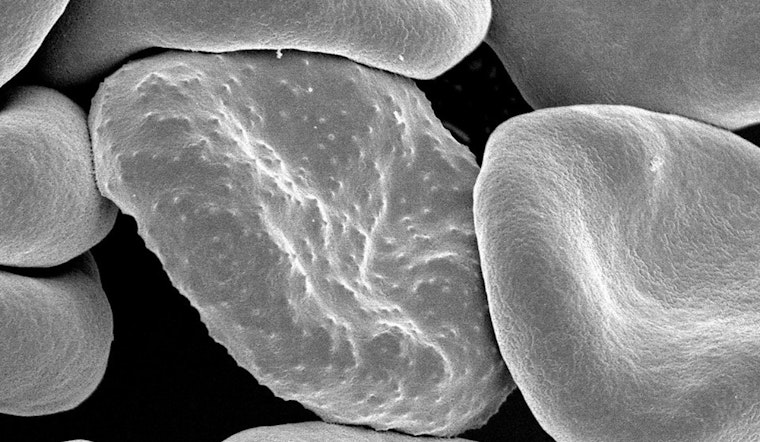
It's a groundbreaking moment in the fight against malaria, with a new paper-based diagnostic device showing promising results in detecting the disease in asymptomatic individuals, reports The Ohio State University. The device, understated in its design, uses simple strips of paper to facilitate chemical reactions that can identify malaria-specific antigens in blood samples. Abraham Badu-Tawiah, the lead author of the study and a professor at The Ohio State University, has delivered this portable lab tech to Ghana, one of the world's most remote regions.
According to their recent publication in Analytical Chemistry, these paper-based devices offer a glimmer of hope with a reported 90% accuracy rate in their field study, putting them on par with a PCR test in terms of reliability. "The question was, can we have a sensitive tool that can be delivered to people no matter where they are," Badu-Tawiah told The Ohio State University. This novel approach to malaria testing not only challenges conventional lab-bound procedures but also provides a boon for regions where labs are inaccessible.
Statistically, malaria remains a global health concern, with the World Health Organization estimating 249 million cases worldwide in 2022 and approximately 608,000 deaths. In Ghana, a country heavily impacted by malaria, the infection rate dropped from over a quarter of the population in 2011 to 8.6% by 2022, attributable in part to the introduction of a preventive vaccine for children. Badu-Tawiah's invention, first introduced in 2016, capitalizes on this preventive approach by allowing rapid and stable testing even in the most remote locations.
As malaria vaccines increase in uptake, lowering natural immunity amongst the population, the need for widespread surveillance grows, especially within sub-Saharan Africa. The new testing method, which is already being refined for detecting other diseases, stands to play a critical role in such surveillance strategies. It's very good and we can deliver these results to people who need it the most, Badu-Tawiah explained in his field study report. For a continent burdened by this disease, advancements like the paper-based device may herald a new era in malaria management and eradication.





