

























































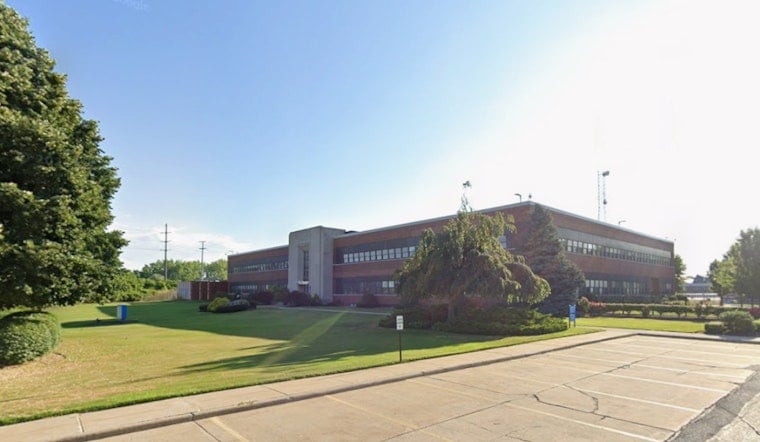
Enbridge Gas Ohio is asking state regulators for permission to raise natural gas rates by roughly $163 million a year, a request that would add about $7.60 to $9.49 to the average residential customer's monthly bill. But a staff investigation at the Public Utilities Commission of Ohio has recommended a much smaller increase, setting up a fight over just how much of that cost households across northern and eastern Ohio should actually have to cover.
According to WKTN, Enbridge's formal application sought a $163,072,527 annual revenue increase, a 17.28% jump, but PUCO staff instead recommended an increase somewhere between $112,646,190 and $129,447,541 — 11.86% to 13.63% — which would trim the estimated average residential monthly bill impact down to $5.90. That gap between what the company wants and what state auditors think is justified sits at the heart of the case now working its way through Columbus.
As reported by FOX 8 Cleveland WJW, Enbridge Gas Ohio spokesperson Stephanie Moore said the proposed increase is needed to manage financial pressures on multiple fronts. The company points to higher operations and maintenance costs, higher construction expenses for meters, pipelines and related work, and a need to recover costs tied to previous system investment. Enbridge also says it needs to reconcile tax accounts related to post-retirement plans, and Moore has said natural gas remains one of the most affordable energy sources, adding that Enbridge customers benefit from the company's robust system and supply sources and currently have some of the lowest natural gas rates in Ohio.
Regulators Have Cut Enbridge Down Before
This is not the first time PUCO has taken a skeptical view of Enbridge's numbers. In the utility's previous base rate case, decided in June 2025, the commission rejected Enbridge's requested $211 million annual revenue hike and instead ordered a $26.3 million annual rate reduction for residential customers, according to the Ohio Energy Report. That recent history helps explain why state staff are again recommending far less than what the company has asked for this time around.
The current proceeding is made up of four consolidated dockets filed December 31, 2025: Case Nos. 25-1097-GA-AIR for the rate increase itself, 25-1098-GA-ALT for an alternative rate plan, 25-1099-GA-AAM covering accounting methods, and 25-1100-GA-ATA for tariff revisions, per the Public Utilities Commission of Ohio. Alongside the base rate request, Enbridge's alternative rate plan application seeks approval to modify and continue its Pipeline Infrastructure Replacement and Capital Expenditure Program riders, mechanisms that let the utility pass pipeline capital investment costs to customers outside of a traditional rate case, the Daily Standard reported.
Community Pushback at Public Hearings
The proposed hike has already generated visible backlash from customers. Fox 8 Cleveland WJW reported that at a PUCO public meeting at the Akron Public Library, resident Robert Adams said Enbridge reported profits of about $1.4 billion in the last quarter, pointing to the figure as he objected to the company's request. PUCO Commissioner John Williams told the outlet that affordability will be weighed heavily during consideration of the proposed increase, and that customer concerns will be factored into the commission's final decision, which is expected around the end of the year.
PUCO planned three public meetings across the service area to hear customer comments on the case. In addition to the Akron session, the commission will hold a public hearing on August 19 at the Frank J. Lausche State Office Building at 615 W. Superior Ave. in Cleveland, and another on August 31 at the Lima Public Library at 650 W. Market St. in Lima. Williams said the public can offer comments or concerns about the case, and customers can also submit comments online through the PUCO website.
Fixed Charges Draw Consumer Advocate Criticism
The Office of the Ohio Consumers' Counsel has issued public alerts opposing the rate increase, warning that raising fixed monthly distribution charges disproportionately hurts low-income households and seniors because those fixed fees cannot be reduced through energy conservation, according to the Office of the Ohio Consumers' Counsel. Unlike usage-based charges, a fixed monthly fee stays the same no matter how much a household cuts back on gas use, which advocates say strips away one of the few tools lower-income customers have to control their bills.
The Ohio Consumers' Counsel also notes that Enbridge's filing is part of a broader wave of utility rate requests moving through PUCO in 2025 and 2026, including a $212 million request from Columbia Gas of Ohio along with separate filings from Duke Energy, AES Ohio and FirstEnergy. That pattern means many Ohio households could be facing compounding increases across both their gas and electric bills in the coming year.
What Happens Next
Ohio Revised Code sections 4909.18 and 4929.05 govern natural gas utility rate applications and alternative rate plans, requiring utilities to prove existing rates are inadequate and subjecting rate requests to mandatory state staff audits, per WKTN. After the three August public hearings conclude, PUCO has scheduled a formal evidentiary hearing at its Columbus offices for September 29, where sworn expert testimony and legal cross-examination will build the official record commissioners use to decide the case, according to Lakeshore Views & News.
Enbridge Gas Ohio operates roughly 22,000 miles of gathering, transmission and distribution pipelines statewide, serving about 1.2 million total customers, including 1.1 million residential households across 400 communities, according to WKYC. Canadian pipeline company Enbridge Inc. acquired the utility, formerly known as East Ohio Gas and Dominion Energy Ohio, from Virginia-based Dominion Energy Inc. in March 2024 in a multi-utility deal valued at approximately $6.6 billion including assumed debt. With a final PUCO decision expected around the end of the year, the size of that eventual monthly bill increase remains squarely unresolved.



