

























































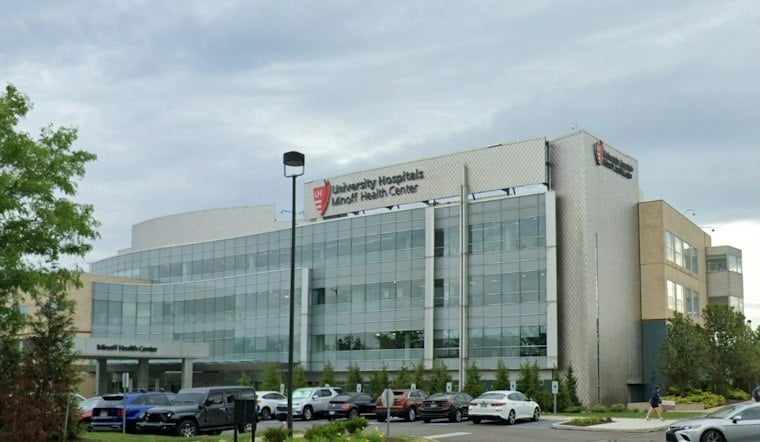
University Hospitals has wrapped up a nearly $10 million expansion of its Minoff Health Center in Orange, Ohio, adding infusion bays, a dedicated CT simulator and more exam space to keep pace with growing demand for cancer treatment at one of UH Seidman Cancer Center's busiest outpatient sites. The facility at 3909 Orange Place, open 12 hours a day Monday through Friday, now has 50 percent more infusion bays and double the private infusion rooms it had before construction began.
As reported by Cleveland.com, the expanded space is designed to let patients get seen sooner, improve coordination of multidisciplinary care, and widen access to innovative treatments and clinical trials. The Minoff center treats a broad range of cancers, including multiple myeloma, leukemia, lymphoma, sarcoma, melanoma, breast cancer, gastrointestinal cancer, genitourinary cancer, gynecologic cancer, lung cancer and brain cancer, while also offering psycho-oncology, cardio-oncology, surgical oncology and palliative care.
Why the Suburban Hub Keeps Growing
The push to expand access, providers, infusion chairs and laboratory services at Minoff tracks with its role as UH Seidman's second-busiest medical oncology infusion site after the main Cleveland campus, per the same account. New clinician pods were also built to let staff chart and consult more efficiently during the renovation.
The center doesn't only serve cancer patients. Its infusion capacity also supports non-oncology patients managing Crohn's disease, rheumatoid arthritis, autoimmune disorders, benign hematology, sickle cell disease and fertility-treatment needs, according to the station's report. That dual role helps explain why added capacity at a single suburban site carries outsized weight for the surrounding community.
Faster Scans, Faster Scheduling
Among the most notable additions is a new dedicated CT simulator with 4D capability, internal and external lasers and a large bore, which the article notes allows the team to see up to seven patients a day. The equipment lets patients be scheduled more quickly and efficiently, and allows for repeat simulation immediately when positioning or anatomy changes delay treatment planning. Radiation oncology at Minoff also doubled its exam rooms and provider offices as part of the project.
Dr. Janice Lyons, who has practiced at Minoff for 23 years, has watched the center's footprint grow alongside patient need. The expansion also added a same-day acute care clinic for cancer patients, which grew from three days a week to five days a week in August, along with a third restroom near the treatment room.
Clinical Trials Get a Bigger Push
UH Seidman Cancer Center had its busiest year ever for accruing patients into clinical trials in 2025, according to University Hospitals, and Minoff's clinical trials team added a third nurse to help manage that growth. Breanne Hennessy, a registered nurse who has managed UH Seidman Cancer Center services at Minoff for five years, said the center remained fully operational throughout construction.
UH Seidman delivers that trial work at Minoff as part of the Case Comprehensive Cancer Center, an NCI-designated consortium, a designation described by the National Cancer Institute as the nation's highest recognition and requiring exceptional strength, integrating cancer research across Case Western Reserve University, University Hospitals and Cleveland Clinic, according to Case Comprehensive Cancer Center. Seidman also operates the region's only freestanding cancer hospital, coordinating specialized outpatient oncology across 18 regional community locations, per University Hospitals.
A Regional Cancer Burden Behind the Investment
The expansion lands against a backdrop of heavy cancer rates across the region. Cancer is the second leading cause of death in Ohio, with more than 70,000 Ohioans diagnosed with cancer each year, according to the Ohio Department of Health. The Case Comprehensive Cancer Center serves a 15-county Northeast Ohio catchment area.
Ohio law also shapes how that patient volume gets tracked. Under Section 3701.262 of the Ohio Revised Code, all Ohio healthcare providers and facilities that diagnose or treat cancer patients must report each case to the Ohio Cancer Incidence Surveillance System within six months, per the Ohio Department of Health.
Part of a Bigger East-Side Buildout
Minoff's expansion follows a pattern of major UH capital investment along the east suburban corridor. The facility was slated to be renamed the UH Minoff Health Center in 2019 after a major gift from former Kichler Lighting chairman Sam Minoff and his family, and it now logs more than 100,000 patient visits a year across primary care, urgent care and specialty clinics, according to University Hospitals.
In Beachwood, UH Ahuja Medical Center completed a $236 million Phase 2 expansion in June 2023 that doubled its footprint and added a dedicated Breast Health Center and expanded emergency facilities. UH also bought the former Synthomer HQ on Harvard Road in Beachwood for $9.1 million, reflecting the health system's continued appetite for suburban real estate near its oncology hubs.



