

























































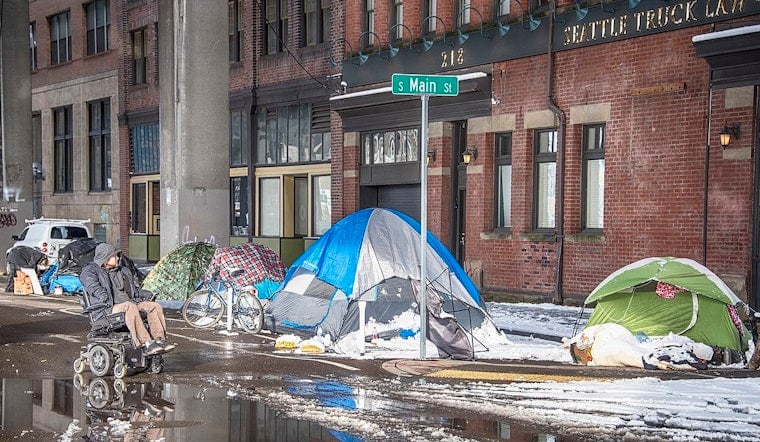
In Snohomish County, the results of the 2025 Point-in-Time count, an annual survey to gauge homelessness, have been released, showing a slight decrease in the number of individuals without homes. Conducted on January 22, the count tallied 1,140 people in 890 households without permanent housing, down 1.8% from the previous year, Snohomish County Government. This survey encompasses those in emergency shelter and transitional housing, as well as individuals living without shelter.
The count this year also reflected changes in the demographics of homeless populations. Snohomish County Executive Dave Somers said, "While there is still a lot of work to do, it is good news that this year’s count is slightly lower than last year, marking a decrease for the second year in a row." It's noteworthy that the sheltered population saw an uptick, largely attributed to the activation of Cold Weather Shelters due to near-freezing temperatures—the shelters had remained closed during the previous year's milder weather. Simultaneously, the total unsheltered count dipped by 14%.
The recent count has also shed light on the shifting racial and ethnic composition of the homeless community. The percentages of Asian or Asian American, Hispanic/Latina/o/e, Middle Eastern or North African, Native Hawaiian or Pacific Islander, and Multi-racial individuals experiencing homelessness saw an increase, while those identified as American Indian, Alaska Native or Indigenous, Black or African American, and White decreased.
Age demographics experienced a notable shift, with those between ages 25-34 and 45-54 decreasing by an average of 13%, while all other age groups increased. The gender balance also shifted, with women making up 40.5% of the homeless population and men 58.3%. The representation of transgender individuals and those of more than one gender or non-binary, or questioning, stood at less than 1%. These statistics highlight an evolving landscape, the nuances of which are essential in addressing the needs of these varying groups.
Despite its limitations, the PIT count is an instrumental tool employed not just for the sake of bureaucratic requirements but for shaping pertinent funding priorities and developing effective strategies to combat homelessness. The data, as put forth by the Snohomish County Partnership to End Homelessness, fuels a broader effort to craft profound, lasting solutions to the plight of those living at the margins.





