

























































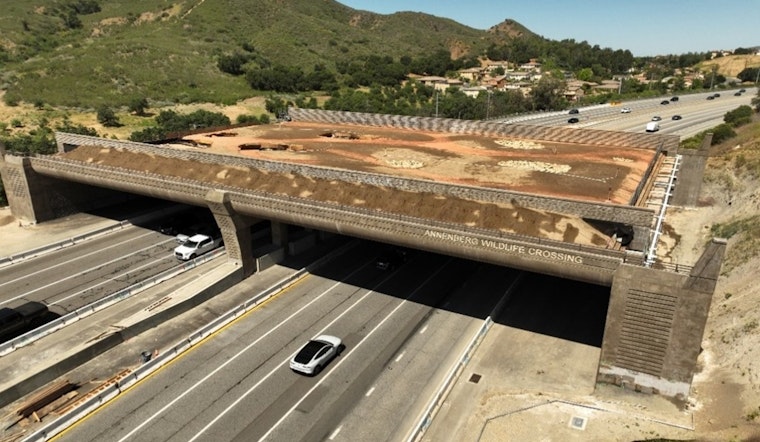
In an effort to conserve wildlife in Southern California, the Wallis Annenberg Wildlife Crossing has entered its final construction phase, bringing the state one step closer to completing what will be the world's largest wildlife bridge. As reported by NBC Los Angeles, the project, spanning the 101 Freeway in Agoura Hills, now extends over an adjacent two-lane road. This ambitious conservation structure aims to provide safe passage for mountain lions and other native wildlife across one of the busiest highways in the nation.
The final stage includes significant civil works, requiring meticulous earthwork to ensure structural integrity while preserving the surrounding habitat. Billed as an infrastructural feat with groundbreaking ecological ambition, the crossing's completion is slated for fall 2026. It will not only alleviate genetic isolation among mountain lion populations, but also cultivate a richer, more resilient ecosystem within the urban sprawl of Los Angeles. Despite the groundbreaking nature of the construction project, an error has slipped into the planning – with landscaping phase being adjusted to avoid the harsh summer conditions, according to information obtained by FOX LA.
Californian Governor Gavin Newsom marked the milestone, suggesting the structure will serve as a paradigm of urban wildlife conservation. "Today, the state is beginning the final phase of construction for what will soon be the largest urban wildlife crossing in the world – all thanks to the visionary work of state, federal, and private partners," Newsom stated. This sentiment was echoed by Wallis Annenberg, of the Annenberg Foundation, who has been a key contributor to the project's funding, and by Beth Pratt of the National Wildlife Federation, who highlighted the unified effort behind the crossing.
The entirety of the crossing will harbor a range of native plant life, thanks to meticulous collection of more than 1.1 million hyper-local seeds by the dedicated nursery staff. The aim is to cultivate a native plant habitat that not only facilitates wildlife movement but also mitigates the risk of fires, as described by NBC Los Angeles. With the addition of comprehensive irrigation systems and the restoration of 12 acres of open space in the Santa Monica Mountains, the project emerges as a testament to biodiversity stewardship in an age of rapidly expanding urban landscapes.
As the project nears completion, the public can witness the trajectory of this landmark construction via a dedicated webcam, offering real-time updates on the progress. This transparency conjures a sense of communal investment in environmental preservation, aligning the public's gaze with the ecological ebb and flow that the Wallis Annenberg Wildlife Crossing is poised to foster.





