

























































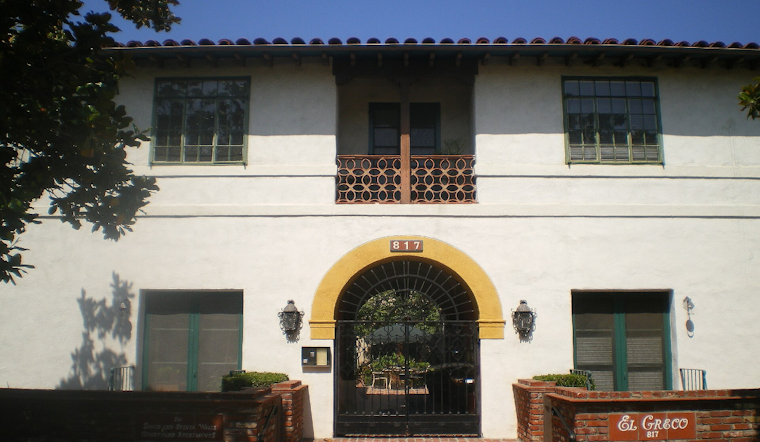
John Destler survived Nazi Germany as a child, served the United States in the Army, and for the past 18 years has called a one-bedroom unit in Los Angeles' Fairfax neighborhood home. Now, at 94, he is fighting to keep it.
Destler's story is being reported by journalist Jasmine Viel, whose coverage details his effort to remain in the apartment he has lived in for nearly two decades, according to CBS News Los Angeles. Destler was born Hans Wolfgang Destler in Berlin in October 1931, and as a young child he witnessed Nazi motorcades before fleeing Germany with his Jewish family to settle in the United States, according to IKAR. He later recorded a formal oral history with the USC Shoah Foundation Visual History Archive in 1995, detailing his childhood in Berlin.
A Rare Landmark Turned Senior Housing
Destler lives in the El Greco Courtyard Apartments, a 12-unit residential complex in the Fairfax neighborhood adjacent to West Hollywood, an area that has historically served as a cultural center for Los Angeles' Jewish community, per the National Association of REALTORS. Designed in 1929 by architects F. Pierpont Davis and Walter S. Davis, the Spanish Mediterranean Revival-style building is designated Los Angeles Historic-Cultural Monument #231 and was listed on the National Register of Historic Places in 1988, according to the Los Angeles City Planning Department. The building originally stood in Westwood before it was relocated to Fairfax in 1985 to save it from demolition. Before it became senior housing, the courtyard complex reportedly served as a temporary home for classic film actor Fred MacMurray, who is said to have occupied the unit Destler now holds, according to the same real estate industry report.
Destler secured his apartment roughly 18 years ago through Affordable Living for the Aging, a Los Angeles non-profit that manages permanent supportive and subsidized housing for low-income seniors, after spending two years on a waitlist. Under that subsidized arrangement, he pays $769 a month in rent, less than a third of market rates for the Fairfax area, funded through Social Security and a small pension. Housing programs generally consider rent affordable when it is capped at 30 percent of a resident's gross income, a threshold that underscores just how precarious losing this arrangement would be for him.
A Vanishing Safety Net for Seniors
The nonprofit that houses Destler, Affordable Living for the Aging, owns and operates five senior housing properties totaling 64 units across Los Angeles, but its waitlist is currently closed due to overwhelming demand, according to the organization. Applicants typically face multi-year waits even when the list is open, leaving few realistic alternatives for displaced seniors like Destler should his housing situation fall through.
That scarcity sits inside a much larger regional crisis. A 2025 report by USC's Neighborhood Data for Social Change found that 58 percent of renter households in Los Angeles County are rent-burdened, a rate that exceeds the national average of 52 percent and makes the county one of the most unaffordable rental markets in the nation, according to Neighborhood Data for Social Change. Nationally, nearly half of all U.S. renter households — more than 21 million families — were cost-burdened by housing expenses as of September 2024, per the U.S. Census Bureau, which put the median national housing cost for renters at $1,406 in 2023.
Seniors Increasingly at Risk of Homelessness
Low-income older adults living on fixed incomes represent the fastest-growing demographic among California's unhoused population, as escalating rental costs continue to outpace income growth, according to Justice in Aging. Nearly half of unhoused individuals nationwide are aged 50 or older, the organization notes, a statistic that frames the stakes for a 94-year-old veteran fighting to remain in the only affordable home available to him.
For Destler, the fight to stay in his Fairfax apartment is not just about four walls and a rent-controlled lease. It is a fight to preserve nearly two decades of stability in a home tied to a preserved piece of Los Angeles architectural history, built by a man who escaped the Nazis as a boy and later served his adopted country in uniform.




