

























































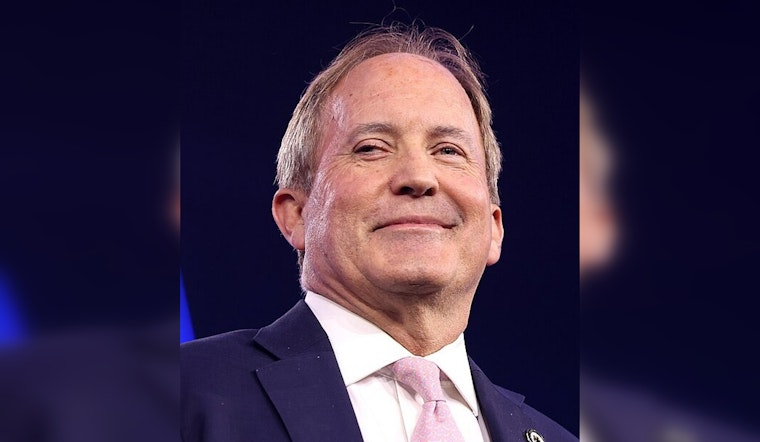
In a significant legal development, Texas Attorney General Ken Paxton has, as per a recent ruling from the Fifteenth Court of Appeals, hindered the City of San Antonio's efforts to facilitate out-of-state abortion travel using taxpayer funds; this comes after the city allocated $100,000 for the "Reproductive Justice Fund," aiming to provide financial support for those seeking abortions outside of Texas's restrictive laws. According to the Texas Attorney General's Office, Paxton had initially filed a lawsuit to terminate the city's program, claiming it violated the Texas Constitution's Gift Clause and disregarded the state's authority which has set strict boundaries on abortion access within its domain.
The appellate court's decision follows what Paxton described as an erroneous trial court ruling that initially allowed the program to proceed, with City of San Antonio's intervention revealing fault lines in Texas over the contentious issue of abortion rights; this legal battle paints a precise picture of the ongoing national debate, where state and local government priorities clash amidst a fractured political landscape following the overturning of Roe v. Wade. "Under absolutely no circumstances should any Texas city be funding out-of-state abortion travel, and I will continue to work tirelessly to end this cruel, unlawful, and morally bankrupt program," Paxton stated, emphasizing his commitment to uphold Texas's pro-life position and its legislative efforts to protect what he terms the "unborn" within the state's jurisdiction, according to the Texas Attorney General's Office.
While the court has ordered a temporary halt on San Antonio's funding initiative, the case is still expected to progress further through the legal system, suggesting that more legal maneuvers and arguments will be laid bare as each side strives to affirm its understanding of justice and state law. The city's "Reproductive Justice Fund" has been at the center of this legal fracas; it represents one of the first of such initiatives to surface in Texas post-Roe, attempting to counteract the stringent abortion laws that have been enacted in the state.
The controversy illuminated by this court ruling draws attention to the intricate balance of state and city powers, and the boundless complexities of reproductive rights in today's political sphere, where cities like San Antonio seek to navigate a labyrinth of legal restrictions in order to align their policies with the healthcare needs they perceive their citizens face, whereas state officials lean on the side of upholding law and order as interpreted through the state's conservative lens. Paxton's unwavering stance and the legal backing from the appeals court, for the moment, assert the prevalence of the state's pro-life legislative framework over the local government's attempt to carve out measures that they argue are in support of reproductive justice, "Forcing Texas taxpayers to subsidize abortion tourism is a profound insult to our state’s pro-life values and our laws protecting the unborn," Paxton affirmed, his position stark against any interpretation of the law that would contravene the state's firmly established pro-life stance, as per the Texas Attorney General's Office.



.jpg)