

























































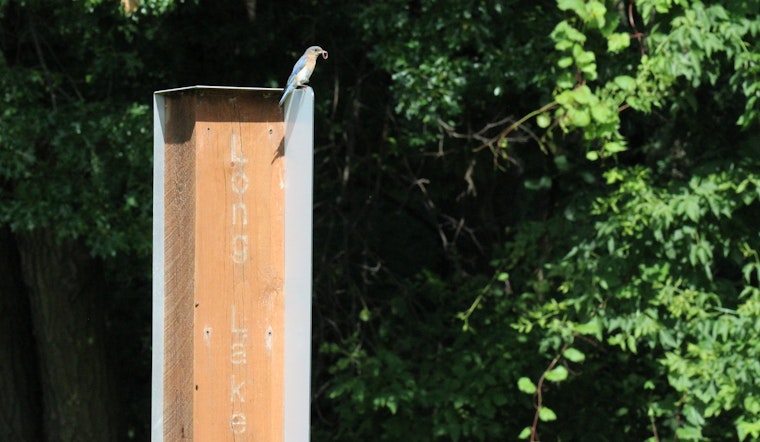
Over in the idyllic settings of Ramsey County's Long Lake Regional Park and Rice Creek trails, Seth Kopf, a member of the Climate Impact Corps, has been conducting bird surveys for the better part of his AmeriCorps service term. An initiative that started in early March, Kopf's work has been pivotal in monitoring bluebird and kestrel boxes—not just as a feather in his cap, but as a crucial move to bolster the local bird populations during the bustling nursery months of spring and early summer.
Kopf, whose foray into forestry work was meant to focus on planting and nursing young trees, found it natural to also lean into supporting the avian community. He didn't just get to quickly warm up to the task, but also, as he told Ramsey County, he got to learn from a flock of biologists and natural resource experts. "I’ve been fortunate to work alongside other great people doing and supporting this work," Kopf said. "I’ve learned a lot on my own, but having the support of different biologists and natural resource experts has been incredibly helpful."
The sites have witnessed the flourishing of more than just Eastern Bluebirds; tree swallows and house wrens are among the array of species thriving in these man-made nesting accommodations. With over 40 young birds reportedly fledging from Long Lake's nest boxes this year, the small initiative has seen a big win for feathered locals. These boxes serve as crucial lifelines for nesting native birds, which have faced the brunt of habitat loss and environmental pressures over the years. They're not just wooden containers; they're lifelines for species whose traditional nesting hollows in aging trees have been drastically reduced due to urban development and land clearing.
In what seems to be an unintentional swan song, Kopf's tenure might just be the last chirp for the Climate Impact Corps, which is not likely to continue due to a dry-up in federal funding. Kopf expressed a mix of pride and concern to Ramsey County, highlighting the uncertainty that follows the program's conclusion. "While I hope the work I was doing can continue in my absence, I know it will be difficult without additional staff to support these efforts," he said. In the absence of these initiatives, the worry isn't just for the birds—but for the fabric of local ecosystems that count on such conservation endeavors.
And while Kopf packs up, his legacy doesn't leave empty nests behind. His wildlife photography, documenting the birds and other fauna of Ramsey County’s parks, offers a multifaceted peek into the lively ecosystems. From the American robins to the goldfinches, citizens can leaf through his portfolio and see the wide-ranging effects Kopf's work—and the larger program—has had on the parks' biodiversity.





