

























































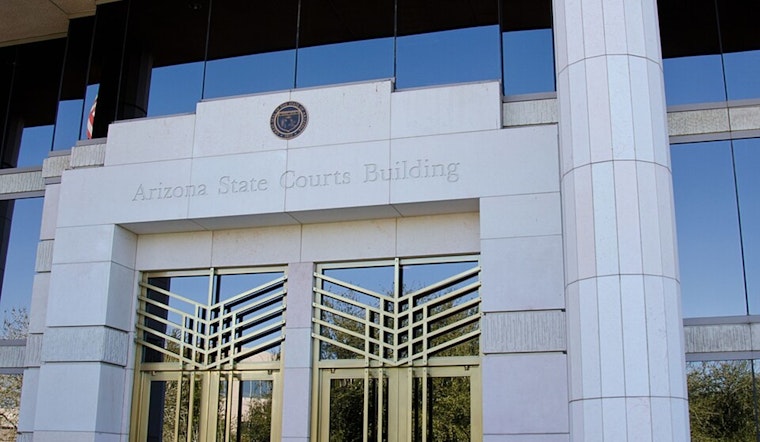
In a significant triumph for grassroots democracy, the Arizona Supreme Court decisively upheld the right of Page city residents to influence local governance directly through ballot initiatives. The case, titled Roundtree v. City of Page, revolved around a contentious measure regarding the future of Lake Powell Boulevard, a primary thoroughfare in the small Arizona town of Page. City officials were initially insistent that the proposed initiative to prevent the narrowing of the road was more administrative than legislative in nature, categorically disqualifying it from appearing on the ballot. However, according to a release from the Court found at Arizona Judicial Branch, the unanimous ruling refuted this stance, steering the democratic process back into the hands of the people.
Justice Clint Bolick, penning the unanimous opinion, articulated that the initiative "expressly creates public policy" and these words, "unquestionably" serve as legislative acts. Addressing the core of the issue, which the Arizona Constitution, specifically article 4, part 1, section 1(8), vests in the populace the unambiguous right to legislative power on par with their local government's authority. After siding with the City of Page, the Court's decision, reversing both the Coconino County Superior Court and the Arizona Court of Appeals, affirms the push to conserve the current state of Lake Powell Boulevard. The Court's mandate to the trial court, as reported by the Arizona Judicial Branch, is to grant appropriate relief, effectively resurrecting the initiative's potential to make it to the ballot.
The measure brought to the forefront by citizens is designed to retain the current number and dimensions of lanes along a 1.4-mile stretch of Lake Powell Boulevard and would call a halt to the utilization of public or outside funds for the purpose of road narrowing. Advocates of the initiative herald the Supreme Court's ruling as a victory not merely for the fate of a local roadway but also for the broader principle of democratic participation in municipal affairs.
With this latest ruling, the Arizona Supreme Court reinforces a profound truth: that it's within the scope of the people's hands to shape the policies dictating the fabric of their immediate environments. Going forward, the City is now compelled by the Court to clear the path for the initiative, thereby ensuring the voters' voices are honed into instruments of actual legislative change. The full Court opinion, expounding upon the rationale engraved in the ruling, is accessible for public perusal at the Arizona Judicial Branch website.



