

























































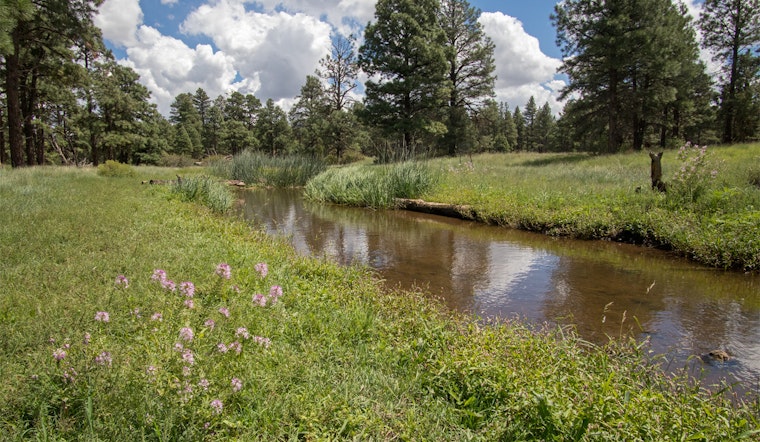
In an effort to confront the looming threat of wildfires and subsequent flooding that could jeopardize the Upper Rio de Flag Watershed near Flagstaff, an ambitious forest restoration project is ongoing. As illustrated in a statement from the Coconino County Flood Control District, catastrophic wildfires and floods pose significant safety risks and come with an economic toll estimated near $3 billion.
Key partnerships are forming the backbone of the initiative. The District is actively collaborating with Coconino National Forest and enlisting support from The Nature Conservancy. “Forest Restoration, such as what is underway in the Upper Rio de Flag Watershed, is the best way to proactively address these threats,” Patrice Horstman, Chair of the Flood Control District Board of Directors, told Coconino County's news outlet. Multiple contractors, including Perkins Timber Harvesting, Suarez Forestry, and Bob Lee and Sons Tree Service, have been contracted for the Hoch Project area which spans 2,045 acres.
Time is of the essence in combating these natural dangers. "Every season that these forests go without adequate forest restoration treatments is another season that we are over-exposed to the risk of catastrophic wildfire,” Joel Jurgens, Forest Program Director for The Nature Conservancy in Arizona, emphasized in the announcement by the Coconino County. The Nature Conservancy is responsible for managing restoration operations, contracting, logistics guidance, and monitoring throughout the process.
To put numbers on the commitment, the Flood Control District has dedicated just over $2 million to the Hoch Project, matched by approximately $2.5 million from Coconino National Forest. Beyond the numbers, Jay Smith, Coconino County Forest Restoration Director, highlighted the adage that ‘an ounce of prevention is worth a pound of cure’ is highly applicable to forest restoration, as detailed in the Coconino County's press release. The cost of recovery following devastating wildfires and flooding events is exponentially higher than proactive preservation efforts.
Further projects include the Wing East area, currently 75% complete, and the Wing West area, expected to be finalized by summer 2026. With mechanical thinning an integral part of all these initiatives, safety advisories have been issued. CNF District Ranger Matt McGrath urges those in proximity to restoration areas to be cautious: “Stay back 300 feet from logging trucks and heavy machinery, and give right of way to logging traffic, especially on narrow forest roads. Safety is our first priority—let it be yours as well,” stated McGrath in communications to Coconino County's online community.
For locals concerned or curious about the ongoing forest restoration operations, additional information is available on the Coconino County's website detailing the specifics of the Upper Rio de Flag Forest Restoration Project.





