

























































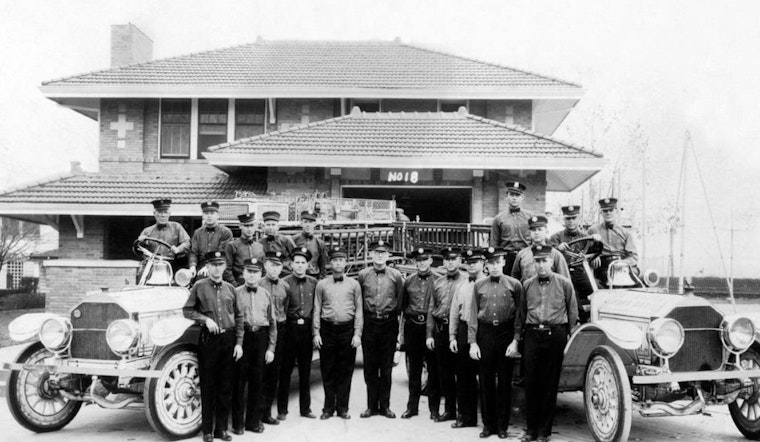
In a nod to the architectural heritage that once defined civic structures, Fort Worth's bungalow-style fire stations still stand as relics of the "City Beautiful" movement of the 1920s. City officials, back in the early 20th century, commissioned these craftsman gems to integrate into neighborhoods with an understated charm. One standout, Fire Station No. 18 at 1908 Carleton Ave., remains the oldest active firehouse in the city, its hearth lit for the first time on Oct. 16, 1923, according to the Fort Worth Texas City News.
Gazing upon Station 18 is essentially a journey back to the era when city planners' vision aligned with simplicity and subtlety. Its cornerstone was laid at the intersection of Camp Bowie Boulevard and Carleton Avenue. The brainchild of architect Charles F. Allen, the station was once at the mercy of progress in the 1970s, threatening its timeless facade. But the Arlington Heights Sector Council stepped in, invoking the full weight of history to save one of Arlington Heights' eldest public buildings, as chronicled by city historians. Meanwhile, insiders whisper about Station 18's ghostly residents, with firefighters recounting inexplicable sounds and sights, lending a spectral footnote to this enduring edifice.
Station No. 15, over at 1905 Belmont Ave., followed Allen's architectural ethos, intended to meld discreetly within Fort Worth’s Northside. Originally crafted by contractor B.B. Adams, the structure's transformations are evident with a post-service life as a private residence. Gone are the fire station's early façades, revealing modern modifications while shedding light on the ever-changing landscape of community buildings, Fort Worth Texas City News notes.
Yet another Allen-Adams collaboration took shape at 431 Fulton St., where a firehouse once resonated with the residential vernacular. Deemed surplus to municipal requirements in 1966, it has since found a new purpose, first as a clinic and now as an office. These adaptive reuses underscore the stations' structural flexibility, even as their design hearkens back to a distinct chapter of city planning. The preservation and repurposing of such spaces speak to a community’s reverence for its architectural legacy.




