

























































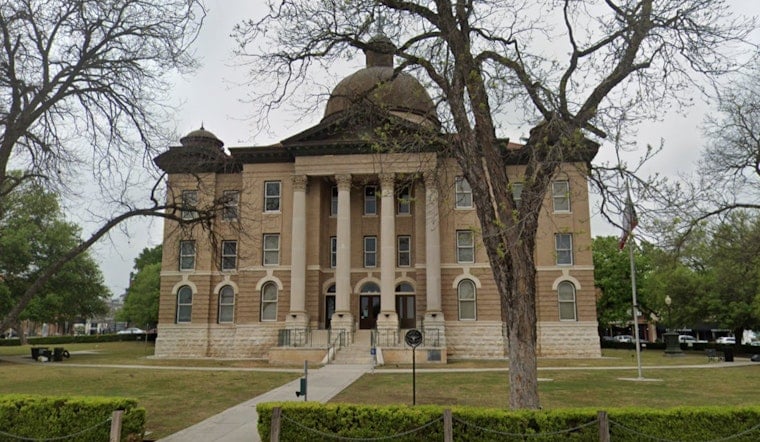
In a unanimous decision rippling through Hays County, the Commissioners Court has set its sights on challenging a judicial ruling that threatens to upend a massive $440 million road bond, as first reported by KVUE. This legal wrangle springs from a recent verdict by a Travis County judge, which put a host of road development projects on hold and contravened the affirmative vote passed by residents last November.
The contested Proposition A—which garnered significant support to address traffic woes, safety enhancements, and burgeoning growth—becomes the center of a debate over voter enfranchisement and bureaucratic transparency. Commissioner Michelle Cohen expressed her discontent to KVUE, stating, "For me, this is beyond just a road bond being voided. This is about thousands of voters' voices being overturned."
Allegations of noncompliance with the Texas Open Meetings Act have undermined the bond's legitimacy, with plaintiffs claiming the county failed to adequately notify the public about the proposal's specifics prior to its placement on the ballot. Despite the judge siding with these concerns, Commissioner Morgan Hammer remains resolute, insisting, as reported by KVUE, "I’m not going to let Travis County tell us how we will run our county."
Although county officials pursue an appeal, County Judge Ruben Becerra is not without apprehension. He fears a protracted and expensive legal battle, expressing to KVUE, "A $450 million road bond – we're still going to move on these projects that are important, meaningful and useful, and so I found it as a potentially wasteful parallel." Nonetheless, he has signaled openness to alternative financing methods such as certificates of obligation to maintain momentum on key projects during the appeals process.
With the court decision under scrutiny, citizen engagement and governmental transparency have catapulted to the fore. Plaintiff Jim Camp vociferously criticized the county's trajectory, lamenting to KVUE, "Those roads are terrible, but we should fix them now... An appeal may just delay it." Camp advocates for increased public input and a reconfiguration of the county's approach to managing its infrastructure projects, cautioning against perpetuating a cycle of indebtedness without adequate taxpayer say.
Moving forward, the county commissioners aim to reconcile the immediate need for road improvements with the imperative of upholding the democratic process. As noted by Commissioner Hammer, "64,422 people voted yes. I won't forget that number and that’s the way we’ve gotta move forward," underscoring the commitment to stand by the electorate's decision as noted in CBS Austin. The ongoing dialogue between the Hays County leadership and its constituents exemplifies the often contentious intersection where direct democracy meets the checks and balances of judicial oversight.





