

























































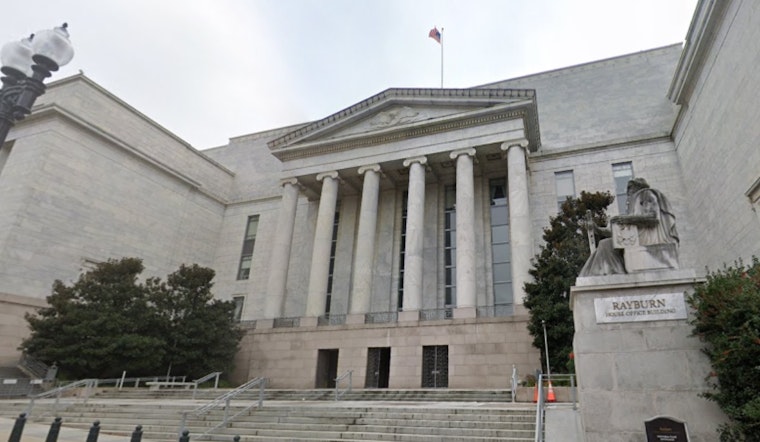
In a move that has escalated tensions over D.C.’s quest for self-governance, the House Committee on Appropriations recently passed the FY 26 Financial Services and General Government Appropriations bill, with restrictions that starkly undercut the district's autonomy. Among these provisions is a contentious clause that proposes to slash funding for the D.C. Tuition Assistance Grant Program (DCTAG) by half, to $20 million—a sharp decrease from its current allocation. The program, which has historically bridged the gap in college tuition for D.C. residents, may now struggle to fulfill its purpose. “I am particularly appalled by the 50% cut in funding for DCTAG, a program created in 1999 by a bill I authored that simply helps pay for students who are D.C. residents to attend college," D.C. Delegate Eleanor Holmes Norton told her website.
Riders added to the bill further strain the District’s local autonomy by overruling laws enacted by the D.C. government and attempting to assert federal control. These riders would, for instance, allow anyone with a concealed carry permit from any state to carry a concealed handgun in D.C. and on WMATA, and prohibit the use of local funds for a variety of D.C.-sanctioned undertakings, including the enforcement of vehicle emission standards and the implementation of the Comprehensive Policing and Justice Reform Amendment Act of 2022. Additionally, they would aim to quickly repeal and cease the funding for policies ranging from D.C.'s Death with Dignity Act to its legislation allowing noncitizens to vote in local elections—a sprawling array of federal intrusions into local governance that Norton has vowed to oppose vigorously. "I will use every tool at my disposal to stop these riders from becoming law," Norton stated emphatically.
In stark contrast to this slew of suppressive measures, Norton secured what she described as key victories for the District. Noteworthy among them is the first increase since 1999 in the annual and lifetime award caps for DCTAG beneficiaries—a financial lifeline extended for students pursuing academic advancement, even as the overall funding for the program faces formidable cuts. Her determined effort underscores a long-standing battle for the right of D.C. residents to self-govern without Congressional overreach—a principle enshrined, though often encroached upon, for the residents of the quasi-autonomous district.
The fiscal measures lassoed to the bill include a potpourri of prohibitions, with riders to prohibit D.C. from using local funds for abortion services for low-income women, enforcing its automated traffic enforcement law, or even from making right turns on red under its local jurisdiction. They also strive to revitalize previously enacted local health care initiatives related to reproductive and gender-affirming care, such as the Insurance Regulation Amendment Act of 2024. The bill mandates a regression in eco-stewardship, curbing efforts to rein in oil and gas companies facing environmental claims. Despite the Republican majority's hold on the House, Norton accentuates that the battle for D.C. autonomy is far from over, as she commits to leveraging her legislative prowess to upend these obstacles, affirming via Norton's website, "D.C. residents deserve consideration equal to that given to as their own constituents."




