

























































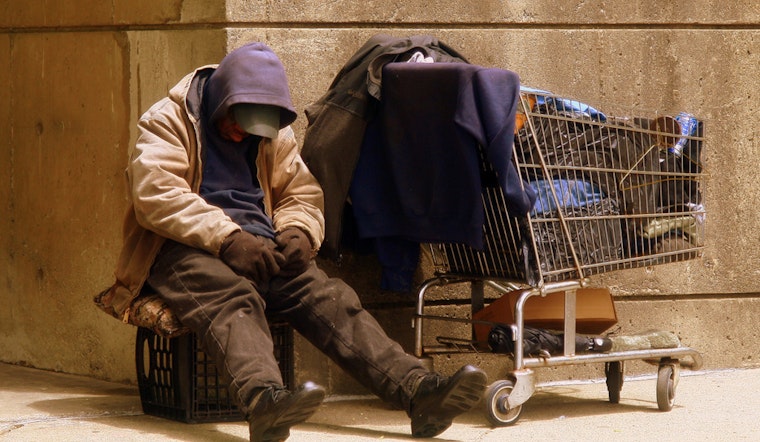
Houston is tightening the reins on its Civility Ordinance, now enabling peace officers to connect the city's homeless population with mental health crisis resources. This development emerged from a City Council meeting this week where the ordinance was expanded with a 14-2 vote, as reported by Click2Houston. The current restrictions on sitting, lying down, or storing personal belongings on sidewalks, which had been in effect from 7 a.m. to 10 p.m., are now enforced around the clock in Downtown and East Downtown.
Responding to the complex issue of homelessness, Councilwoman Dr. Letitia Plummer introduced an amendment now allowing officers to connect individuals who appear to be experiencing a mental health crisis with the Mobile Crisis Outreach Team (MCOT) or the Crisis Intervention Response Team (CERT), services that may be deployed either in person or via telehealth. This marks a significant shift from the ordinance's previous scope, which didn't directly address mental health issues on the streets. It's a response that's aligned with a forthcoming state law taking effect in September of 2025, which allows peace officers to detain individuals in a suspected mental health crisis without issuing a warrant, as noted by Click2Houston.
Nevertheless, Chief Larry Satterwhite from Houston's Public Safety and Homeland Security division has raised concerns about the city's capacity to effectively implement this amendment given the limited resources, skeptically asking in a statement obtained by Click2Houston, "I’m just not sure that we have the resources to make this happen every time someone says no. They say no, a lot. So, we’ll bring this team out every time?" To mitigate this, the amendment has been drafted with flexibility, highlighting that officers may utilize mental health services as available rather than being obliged to do so.
On the other hand, extending the Civility Ordinance has sparked concerns among some council members and Mayor John Whitmire about potentially negative consequences for those it seeks to help, especially given that many individuals impacted lack access to basic communication or identification, noting "These folks don’t have addresses or phone numbers. We don’t know their next of kin," as per Click2Houston’s interview with Dr. Plummer; moreover, the city is focused on avoiding the criminalization of mental illness and homelessness, instead directing efforts to alter the landscape of urban poverty in Houston through this amended ordinance, which is initially rolling out as a pilot program to assess its efficacy through data from police and housing services.
The city's ongoing efforts to address homelessness could also see the Civility Ordinance expand its reach into more neighborhoods, this is part of the Whitmire administration's broader strategy to manage the issue in populated areas, as noted by KHOU. Mayor Whitmire has expressed his expectation for the ordinance's passage and its potential to help those living on the streets and nearby businesses by possibly discouraging street homelessness through enforcement of the sleeping ban 24/7 in the Central Business District and East Downtown, a controversial but intended move to improve civility.





