

























































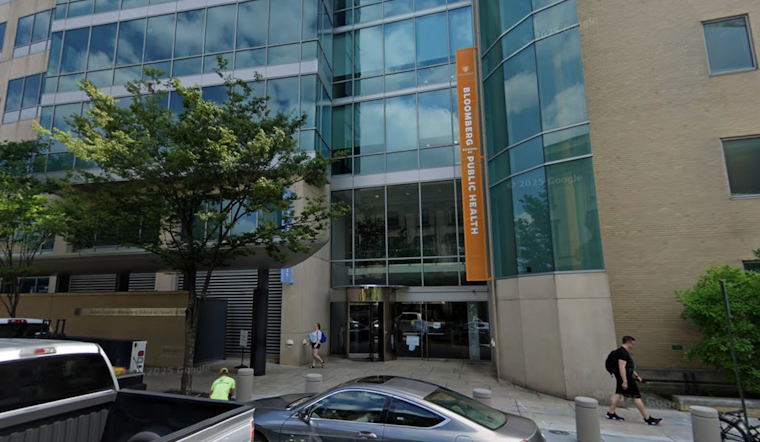
A recent study by Johns Hopkins Bloomberg School of Public Health has confirmed that operations at the CSX coal terminal in Baltimore are contributing to increased air pollution in the Curtis Bay community. Dr. Chris Heaney's research found that particulate matter in the air, including black carbon, was elevated when there was visible bulldozer activity at the coal terminal and when winds were blowing from the terminal towards the community.
According to a WMAR2 News report, Heaney's study revealed that "on average over that year every minute there was downwind from the coal terminal, particulate matter air pollution increased." This study supports long-standing complaints by Curtis Bay residents, who have reported the accumulation of black dust in their homes.
Despite reassurance from CSX that their operations adhere to stringent environmental standards, residents and advocates like Greg Sawtell have grown weary of the lack of tangible change. "Having this new information is kind of two things at once. One, it validates, you know, that people are experts of their own community. Number 2 is that expectation that with this new knowledge, with this new information, comes a responsibility, not on the community, but on officials whose job it is to safeguard all of our health," Sawtell stated, as per WMAR2 News. Heaney's findings suggest that measures enacted by CSX to reduce pollution are not as effective as claimed.
Curtis Bay, which is densely surrounded by industrial activity, holds a significant position, as it contributes to roughly one-third of the U.S.'s annual coal exports. A CBS News Baltimore article noted that the coal terminal has been a longstanding source of concern for residents due to air pollution. Last fall, the Maryland Department of Environment updated its protective measures for the terminal, though residents assert that these efforts have not ameliorated their day-to-day experience.



