

























































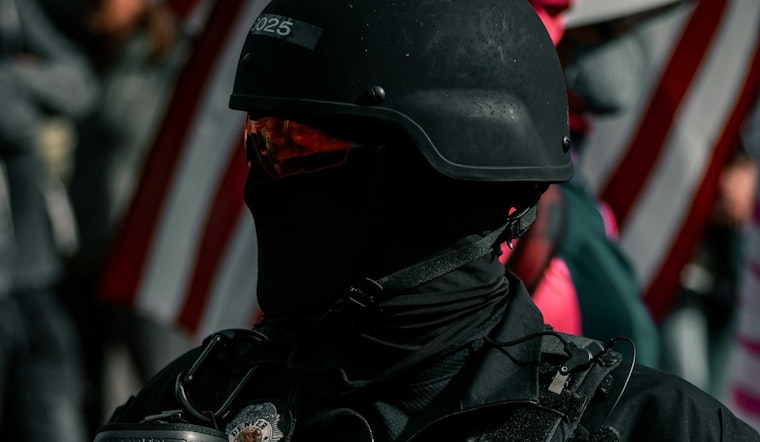
In a decisive move against face-concealing practices among law enforcement during operations, the Los Angeles County Board of Supervisors has pushed for legislation that would ban the wearing of masks by officers, in response to concerns that arose during recent immigration raids. As reported by FOXLA, the Board voted 4-0, with Supervisor Kathryn Barger abstaining, to draft an ordinance that would apply to all law enforcement agencies operating in unincorporated areas of the County, including federal agents from U.S. Immigration and Customs Enforcement (ICE).
Supervisors Janice Hahn and Hilda Solis initiated the motion, citing numerous incidents where residents encountered law enforcement personnel with masked faces and without visible identification. Wearing tactical gear and refusing to show badges when prompted, these agents have reportedly instigated a climate of fear and mistrust within the community. "When agents are unidentified and masked, how can the public tell the difference between a legitimate officer and a dangerous imposter?" Elizabeth Long asked during the meeting, emphasizing the crux of the issue, as mentioned by LAist. The proposed ordinance would include exceptions for undercover operations and for authorities wearing gas masks, fire/smoke protection masks, or medical-grade masks, reflecting a balance between enforcement transparency and operational safety.
However, federal officials have defended the practice, with U.S. Homeland Security Secretary Kristi Noem highlighting concerns over the personal safety of ICE agents, who have allegedly faced threats and doxing from gang members and activist groups. In a statement acquired by FOXLA, Noem declared, "We will prosecute those who dox ICE agents to the fullest extent of the law. These criminals are taking the side of vicious cartels and human traffickers. We won't allow it in America."
In the midst of drafting the ordinance, questions loom about the County's authority to regulate the actions of federal agents and the potential for this legal matter to be argued in court. Following Tuesday's vote, Supervisor Hahn acknowledged that while requiring law enforcement officials to publicly identify themselves seems to be a "common-sense reasonable expectation," they are aware that federal intervention might challenge this local ordinance, as illuminated by AP News. Despite Barger's abstention due to concerns about enforceability and giving residents false hope, the proposal has garnered significant support at the community level and within the board itself. County Counsel Dawyn Harrison was quoted, expressing skepticism regarding enforcement: "I’ll be honest. Practically speaking, I don’t know how that would work," a sentiment that echoes Barger's position on practical implementation of the ordinance.
The move by the LA County Board of Supervisors aligns with similar legislative efforts unfolding at state and federal levels. State Senate bills and Congressional proposals, like the No Secret Police Act, are looking to implement comparable restrictions on law enforcement's ability to conceal their identities while on duty. With LA County counsel given 60 days to present the draft ordinance for approval, the coming weeks could significantly shape the intersection of local and federal law enforcement practices, as seen from the eye of the public and the lens of legal discourse.





