

























































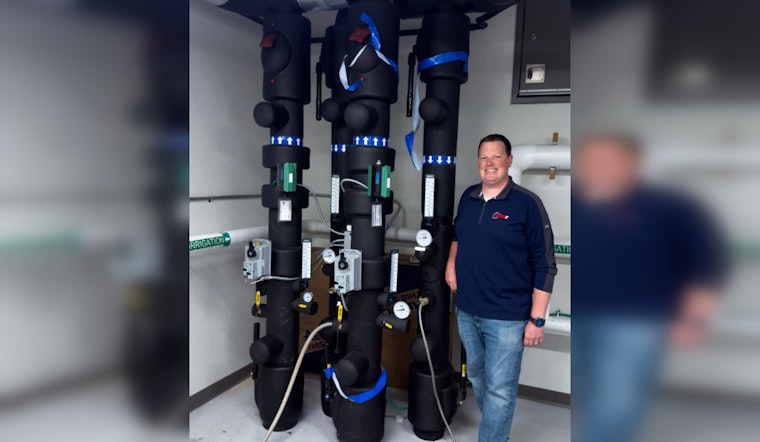
Minnesota's new State Emergency Operations Center (SEOC) is now built to tackle the unforeseen with grace and tenacity, engineered with cutting-edge sustainable technology to be ready for anything. Riley Slimmer, who serves as the facilities, safety, and security coordinator for the Homeland Security and Emergency Management (HSEM) division, managed the construction project, imbuing the SEOC with an array of advanced energy efficiency features, as detailed in a release from the HSEM.
One key innovation is the facility's geothermal heating and cooling system, which harnesses the earth's subterranean temperature to maintain a stable climate inside the building. During the winter, it extracts warmth from the ground, and in the summer, excess heat is funneled back beneath the surface. According to Slimmer, "reliable power isn’t just helpful, it’s critical to keeping Minnesotans safe," he stated in recent remarks. The geothermal solution is designed to minimize power usage from the grid, remaining operational in the face of emergencies that typically disrupt traditional utilities.
Additionally, the SEOC boasts a comprehensive solar panel system capable of powering essential operations, including lighting, computing, and communications infrastructure. Positioned in a wide-open area to optimize sunlight exposure, these panels represent a vital component of the center's commitment to renewable energy. This not only promotes monetary savings in the long haul but also dramatically reduces environmental impacts. "The renewable energy systems in the new SEOC do not just save taxpayer dollars through long-term energy efficiency, but they help make sure that backup power is always available for the most critical needs during a disaster," HSEM Director Allison Farole explained in the aforementioned source.
With an ability to sustain itself for up to 72 hours autonomously using solar-generated power and backup generators, the SEOC is a beacon of self-sufficiency, poised to coordinate emergency responses without interruption, even amid severe storms that may knock out power lines. The combination of geothermal and solar energies is not merely a savvy financial and ecological choice but, as articulated by the HSEM, it's a strategic safeguard ensuring Minnesota’s readiness against the unexpected.





