

























































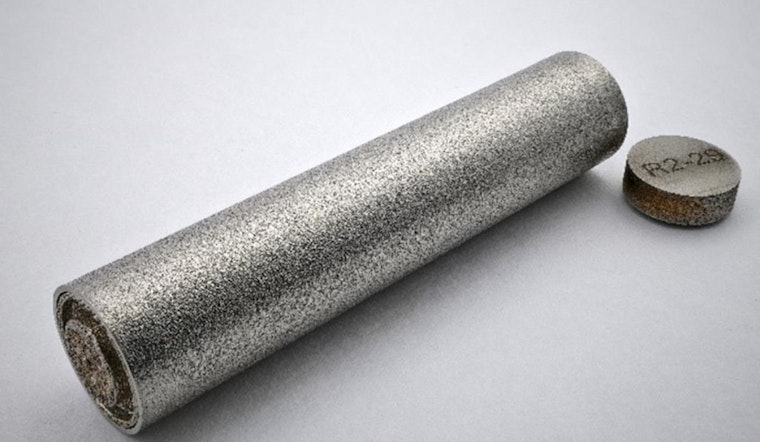
In a stride toward the future of nuclear technology, Oak Ridge National Laboratory (ORNL) recently announced the successful test of two 3D-printed stainless steel experimental capsules. The Department of Energy’s high-profile reactor, the High Flux Isotope Reactor, or HFIR, was the testing ground for these critical components for irradiation experiments. According to Oak Ridge National Laboratory, this event signals a significant milestone in additive manufacturing for nuclear applications.
Additive manufacturing, commonly called 3D printing, is set to potentially become a game-changer in producing nuclear reactor parts. The tested capsules, which are designed to contain and protect materials during testing, are "being evaluated because it offers high-temperature strength, corrosion and radiation resistance, proven nuclear-grade performance and weldability needed for safe, durable use in reactor environments," according to ORNL. Constructed from 316H stainless steel, these capsules have proven to withstand the high-neutron flux environment inside HFIR. Ryan Dehoff, director of the ORNL’s Manufacturing Demonstration Facility, suggested in a statement obtained by ORNL that the industry might soon standardize additive manufacturing for critical reactor components.
The irradiation testing phase spanned an entire month, after which the capsules were removed fully intact from the reactor, a reassuring affirmation of their resilience. This durability is crucial because these capsules play a vital role in enveloping material samples, thus ensuring the containment of potentially hazardous substances during experiments. As envisioned by the experts at ORNL, this technology could revolutionize the manufacturing process of reactor components, thereby making research and development more cost-effective and efficient.
Finally, the successful testing of these capsules is not just a win for ORNL or the Department of Energy; it represents a forward leap for U.S. manufacturing. In the wake of these tests, there is an air of anticipated innovation, signaling a new chapter for the future of nuclear science and technology. ORNL, managed by UT-Battelle for the Department of Energy’s Office of Science, continues to underline its status as a hub of scientific breakthroughs that address some of the globe's most pressing challenges.





