

























































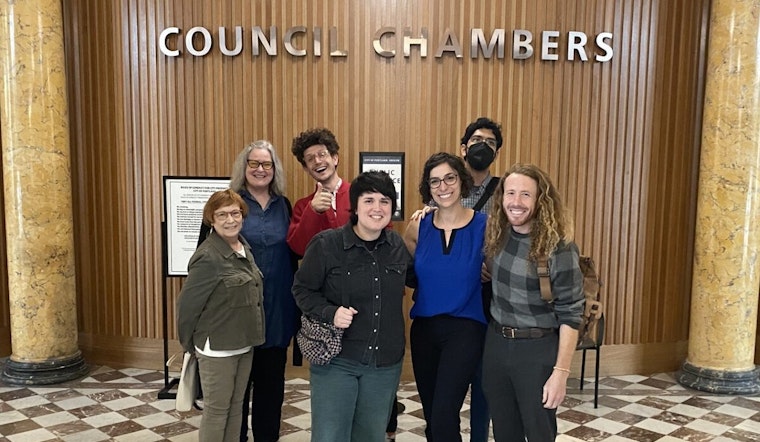
In a unanimous decision on June 25, the Portland City Council adopted Councilor Jamie Dunphy's ordinance that aims to harmonize the city's approach to noise enforcement. It's a move that's set to streamline the City’s noise code and offer more transparent and accountable enforcement mechanisms, just as Portland's music scene hits its summer stride.
The ordinance arrives on the heels of an emergency vote, spurred by urgent appeals from community advocates. Councilor Dunphy commented on the importance of the reform, "This is a win for everyone: our musicians and artists, our small businesses, our neighborhoods, and our city," in a statement obtained by Portland.gov. With the adoption of Title 18, the city's established Noise Control Code, enforcement will be grounded in a more objective framework that prioritizes decibel-based measurements while still recognizing the "plainly audible" standard.
Under the old system, Portland City Code Chapter 14A.30.010-020 governed noise complaints, employing a "plainly audible" standard that, according to critics, allowed too much room for subjective interpretation. As a result, police will continue to have the authority to enforce noise violations which, under the refurbished guidelines, lean towards measurable noise levels. "This ordinance doesn’t eliminate 'plainly audible' standards," Dunphy clarified, "But it brings all noise enforcement under one roof and one set of tools. When decibel readings are available, they take precedence. That’s an important step toward consistency."
David "DJ OG One" Jackson, a fixture in Portland's music scene and an advocate for music equity, has been a vocal supporter of the change. "Portland has an incredible opportunity to be a national leader for independent music and culture," Jackson said, and yet, "we can’t do that when the rules are unclear or applied unfairly." He cited historical instances where noise enforcement was disparately aimed at communities of color and marginalized artists, emphasizing, "This new policy gives us a level playing field." Jackson's remarks were echoed by Councilor Dunphy, who underscored the effort as essential to a fairer, more vibrant Portland.
The support for Councilor Dunphy’s initiative spans both the local music community and regulatory boards. After five years of advocacy from entities like MusicPortland and numerous local venues, the City's Noise Review Board officially backed the reform initiative.




