

























































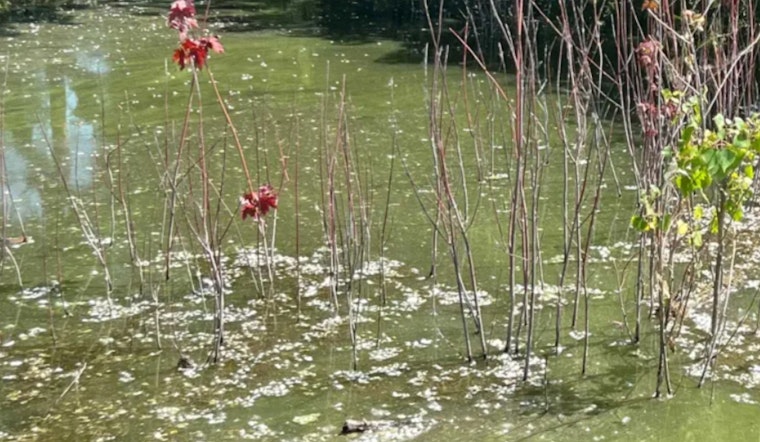
Residents near Penn Lake and those planning to visit should think twice before letting skin — or paws — touch the water. A recent water sample from the Bloomington area has sounded the algae alarm, confirming the nefarious blue-green variety, known scientifically as cyanobacteria, has taken up residence in the lake. This isn't your average pond scum, folks — it's a toxic problem that comes with a public health warning.
It seems innocuous enough, but appearances can be deceiving. The algae bloom can produce toxins harmful to both humans and animals, causing everything from mild skin irritation to serious digestive unrest if ingested. Visitors to the lake should avoid direct contact with water that appears green, scummy, or carries an aroma that doesn't exactly remind one of a fresh spring breeze. And let's keep Fido out of the muck, too; pets should not drink or swim in affected waters, as they're often more vulnerable to the harmful effects. Anyone unlucky enough to make contact with the bloom should rinse off thoroughly with clean water post-haste.
But just how serious is this slimy situation? According to the Nine Mile Creek Watershed District cited on the City of Bloomington's website, "Blue-green algae can produce toxins that may cause skin irritation, nausea, or more serious health effects if ingested." That’s not something to take lightly, especially since kids and pets are at the top of the at-risk list. As a precaution, rinse-offs are strongly recommended if you've dared to dabble in the lake's less-than-crystal-clear waters.
The local authorities are on the case, keeping an eye out for our aqua pura. Updates on the state of affairs at Penn Lake come courtesy of the Nine Mile Creek Watershed District's alert page, a handy resource for keeping abreast with this developing story. So before you plan your next lakeside picnic or pooch paddle, do yourself and your furry friends a favor — check the latest updates and make sure your day at the lake doesn't turn into a dive into toxin town.





