

























































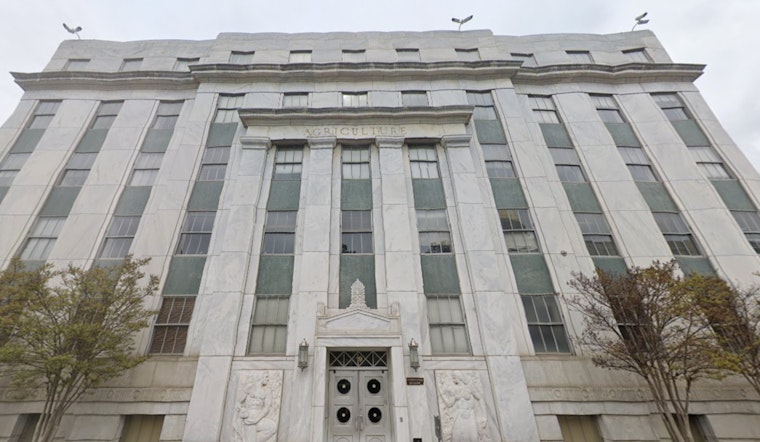
Earlier this month, Georgia Agriculture Commissioner Tyler J Harper aligned with top federal officials to unveil the National Farm Security Action Plan, per details from a government press release. A coterie comprising U.S. Department of Agriculture Secretary Brooke L. Rollins, Defense Secretary Pete Hegseth, Homeland Security Secretary Kristi Noem, and Attorney General Pam Bondi, among others, confirmed the plan positions American agriculture squarely within our national security purview. Harper was quoted saying, "China and other foreign adversaries are a very real threat to American agriculture, our nation's food supply chain, and our national security, and I'm thankful that the Trump Administration recognizes that threat," in a statement obtained by the Georgia Department of Agriculture's official website.
Outlined within the plan are strategies including the fortification of American farmland against foreign ownership, augmenting the resilience of the U.S. supply chain, and warding off bioterrorism threats that might compromise our nation's agricultural output, the USDA implementing stringent measures that aim to preserve our food's provenance and protect the underlying infrastructure deemed critical by these offices, this multifaceted approach lends itself to prodigious scrutiny; transparency requirements will be intensified, and penal actions against violations are set to be bolstered. The implications of this strategy extend far beyond fields and foodstuffs, touching on the integrity of innovation and the protection against economic manipulation through schemes orchestrated by players outside our borders.
Historical context amplifies the urgency of this action, as recent years witnessed overt moves by China to anchor itself within the American agricultural sector. Notoriously, Shuanghui, a company under the Chinese government's sway, acquired Smithfield Foods—a leading pork producer in the U.S.—at a price point raising eyebrows and red flags alike. Chamfering the edges of economic warfare, the Bank of China facilitated this $4 billion transaction with alacrity befitting their national agenda, as reported by a Georgia Department of Agriculture press release.
Incidents of Chinese interests positioning themselves perilously close to strategic military installations in America lend weight to the discourse, with revelations of significant land purchases made by CCP-affiliated individuals sparking warranted trepidation, Sun Guangxin, a business magnate with deep CCP ties acquired hunks of Texan soil underlapping McLaughlin Air Force Base, such strategic overtures go unreciprocated but not unnoticed as American governance codifies its stance. After alarming land purchases came to light in Oregon and North Dakota, Georgia has drawn its line in the red clay, proscribing adversarial foreign nations from acquiring a slice of its farmland heritage, setting a precedent that might burgeon into a wider national movement.





