

























































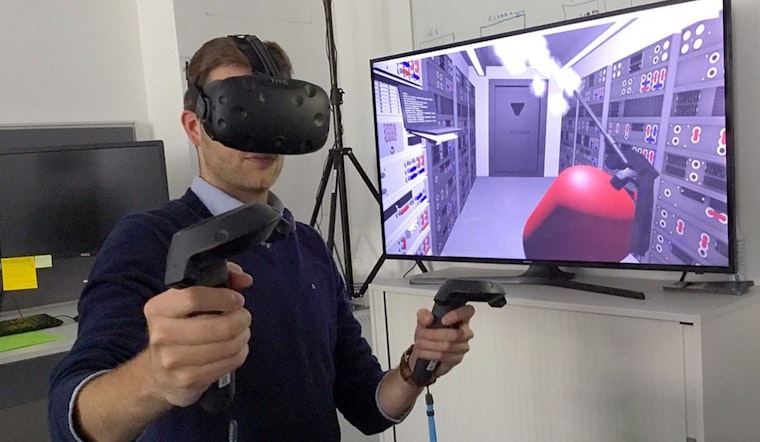
In a tech-savvy shift for language education, the University of Cincinnati is making cultural immersion possible without the need for a passport or plane ticket. UC's innovative language program now incorporates virtual reality (VR) technology, intended to immerse students in virtual overseas environments without stepping off campus, a move likely to attract students who can't afford or can't take time off for the study-abroad experience.
UC's CEDAR, or Curricular Enhancement, Development, Access and Research Language Resource Center, has rolled out this VR curriculum aiming to replicate the deep cultural and conversational engagement typically reserved for students able to travel abroad, whether to Europe, Latin America, Asia, or further afield traditionally, onsite cultural immersion is the gold standard for language acquisition. Still, now, UC students have the next best thing at their fingertips.
"The 'A' in CEDAR stands for access," Kara Moranski, co-director of CEDAR and an assistant professor of Romance Language and Literatures at UC's College of Arts and Sciences, underscored the initiative's goals. According to UC's news release, she said, "The VR experiences that we are creating provide access to highly immersive, interactive cultural learning experiences." Touting the transformative impact of immersive learning, Moranski and her team are eager to bring such experiences to a broader student audience, fulfilling the College's mission, known as Discovery In Action.
As today's world weaves tighter global connections, the pressure mounts on educators to keep pace, preparing students for futures where international flux and cultural interplay are norms. Moranski told UC, "As we become more globally connected every day, we feel it is our duty as educators to use technology to get our students ready to be part of what the future may bring to them."



