

























































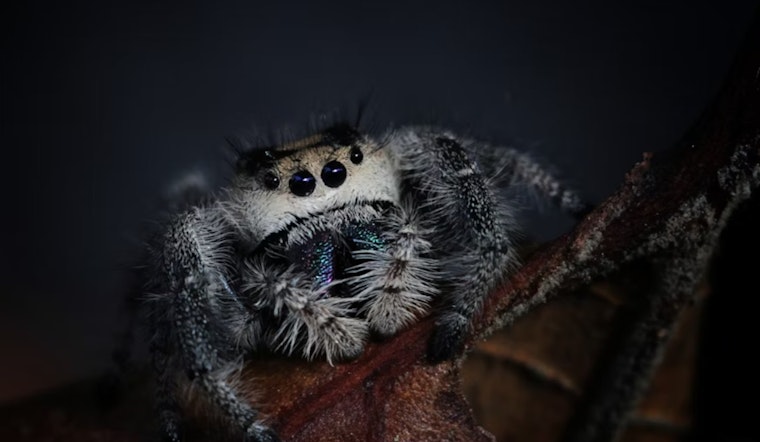
In a recent study that has piqued the interest of scientists and tech enthusiasts alike, researchers at the University of Cincinnati have discovered that certain spiders are capable of bamboozling artificial intelligence with their appearance. These spiders, which bear a close resemblance to wasps to the extent that they are even named after them, aren't just fooling human observers with their visual mimicry — they're also throwing a wrench into the workings of computer algorithms designed to identify and differentiate between species based on shapes and patterns.
With the pandemic putting a halt to fieldwork, the biologists saw an opportunity to test the accuracy of their artificial intelligence tools. They presented the AI system with digital images of not just the wasp-mimicking spiders but also those of jumping spiders, praying mantises, and genuine wasps. Named after their avian predators, which, ironically, wasps often prey on, but had researchers questioning if their disguise was truly effective or merely a human perceptual bias being projected onto the spiders.
The findings, which were published in the Behavioral Ecology journal, according to the UC News, came as a surprise to the scientific community. It turned out that the AI system was fooled by the spider's wasp-like appearance nearly one-fifth of the time. This raises intriguing questions about the evolution of mimicry in nature and its potential to deceive not only biological creatures but also sophisticated technological systems designed for pattern recognition.
This research adds a layer of complexity to our understanding of mimicry in the animal kingdom. And while AI technology is advancing rapidly, it appears that there is still much to learn from the natural world, where a spider can put up a rouse that confounds an algorithm intended to see through the natural facades created by millions of years of evolution. The study highlights how, even in a controlled digital environment, nature's ingenuity proves to be a challenging puzzle for human creations.



