

























































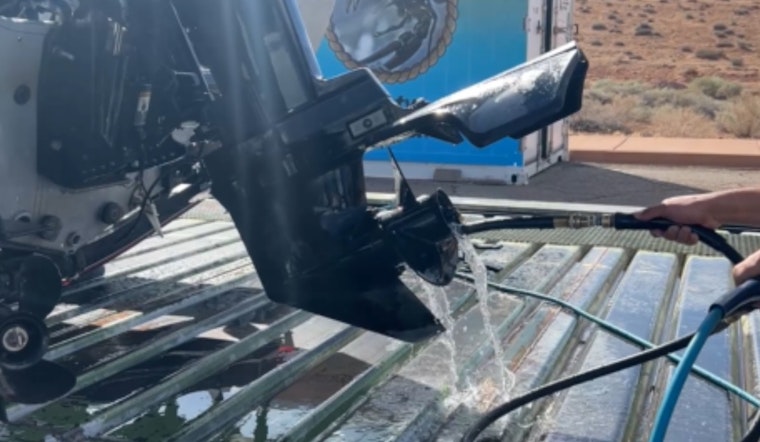
Over the recent Fourth of July weekend, the steep increase in watercraft activity called for stringent inspections to halt the spread of aquatic invasive species in Utah. In a coordinated effort, the Utah Department of Natural Resources, alongside other agencies, examined over 10,000 boats and performed hundreds of decontaminations. As reported by the Utah Department of Natural Resources, the initiative focused on intercepting the menace of quagga mussels and Eurasian watermilfoil, among other species, as they threaten to infiltrate additional Utah waterbodies from infested areas like Lake Powell and sites beyond the state's borders.
With a total of 10,301 boat inspections and 256 decontaminations carried out from Friday to Monday, the inspection blitz was a massive operational feat. Also reported by the Utah Department of Natural Resources, of these boats, 1,547 inspections and 66 decontaminations occurred specifically around the Lake Powell area. Desperate to ensure the prevention of the spread of these species, the Department has instituted mandatory inspection stations, such as the one in Kanab. "We want to remind boaters that they are required to stop at the new aquatic invasive species mandatory inspection station in Kanab," said Utah Department of Natural Resources Law Enforcement Aquatic Invasive Species Statewide Operations Lt. Bruce Johnson, as obtained by the Utah Department of Natural Resources. This emphasizes that even watercraft previously inspected at Lake Powell must comply.
Utah's war against the aquatic invasive species doesn't stop at inspections alone. Forty inspection stations pepper the state at strategic points like waterbody boat ramps and Port of Entry stations. Additionally, to combat the complexity of decontaminating some boats, five dip tanks have been installed at key locations across Utah, including two at Lake Powell and others at Utah Lake State Park, Sand Hollow State Park, and Willard Bay State Park. All facilities offer free services to uphold the protection of the state's aquatic ecosystems.





