

























































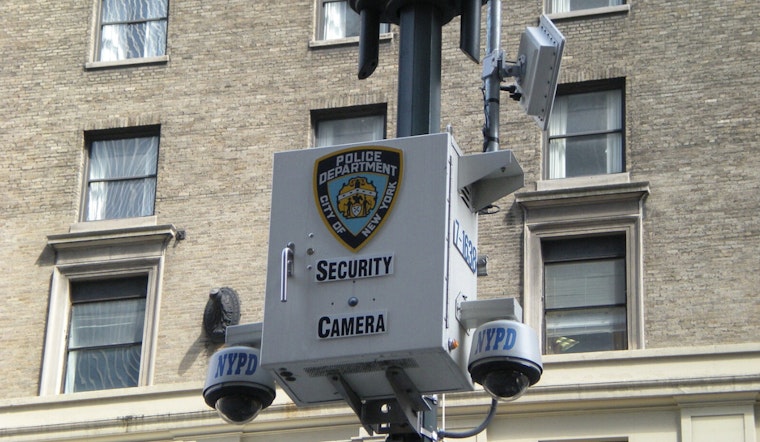
A Brooklyn man's ordeal with a wrongful arrest has placed the NYPD's use of facial recognition technology under intense scrutiny. Trevis Williams, 36, has found himself at the center of a contentious debate regarding the technology's reliability and its potential for misuse, following a two-day stint in custody for a crime he didn't commit. According to CBS News New York, Williams was misidentified as a man who had exposed himself in Manhattan – a mistake firmly attributed to facial recognition tech deployed by law enforcement.
"He was arrested, he was prosecuted, and in spite of us telling the district attorney’s office that we had evidence that Mr. Williams was nowhere near the scene of the crime at the time, the case continued," Diane Akerman of the Legal Aid Society's Digital Forensics Unit, clearly frustrated with the situation, told CBS News New York. Meanwhile, the NYPD maintained that facial recognition is but a tool that leads to tips and is never the sole basis for an arrest. The trouble, however, is in the details: Williams was much taller and heavier than the actual suspect. His lawyers at the Legal Aid Society have pointed out the inaccuracies and are now calling for a ban on the technology.
Further complicating the NYPD's position, the Legal Aid Society accused the Special Activities Unit, as well as other city agencies like the FDNY, of exploiting facial recognition beyond approved boundaries. An alarming pattern was outlined in a letter sent to officials including Inspector General Jeanene Barrett, claiming that the police department relied on matches from unauthorized databases and enlisted outside help to skirt restrictions. The NYPD has faced criticism for this apparent sidestepping of regulations meant to prevent such errors, as detailed by Eyewitness News.
This misuse of facial recognition technology is not just an isolated incident. STOP, the Surveillance Technology Oversight Project, highlighted the software's tendency to misidentify people, especially those of color, the young, and the elderly. "Everyone, including the NYPD, knows that facial recognition technology is unreliable," Diane Akerman, Staff Attorney with the Digital Forensics Unit at Legal Aid told Eyewitness News. Albert Fox Cahn, founder of STOP, echoed these concerns about the racial and demographic biases embedded in the algorithms.
Williams' life has been invariably altered by the wrongful arrest. Once in the process of becoming a correctional officer at Rikers Island, he found his application frozen due to the charges. "I was so angry ... I was stressed out," Williams said, expressing the weight of the issue succinctly to Eyewitness News, "I hope people don't have to sit in jail or prison for things that they didn't do." As for the NYPD and FDNY, they continue to assert the necessity of using all available tools for ensuring public safety.





