

























































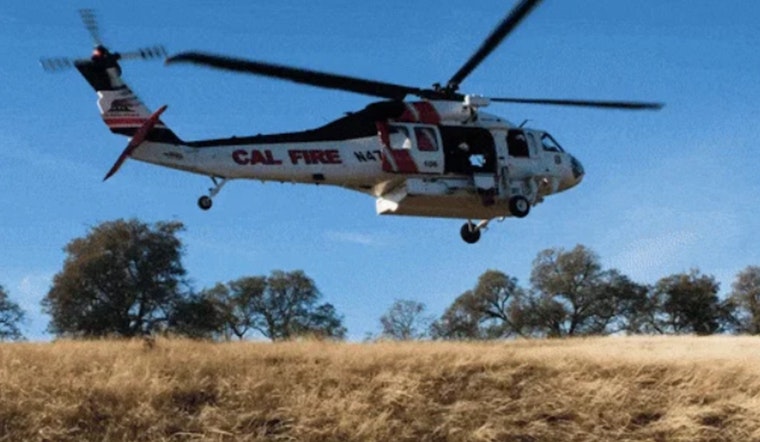
California has launched its testament to fire resilience, unveiling the largest civilian helicopter firefighting fleet on the globe, despite the federal government's decreasing emphasis on such public safety measures. According to a press release from Governor Gavin Newsom's office, the culmination of a comprehensive fleet modernization project leaves the Golden State equipped with 16 Sikorsky S-70i Fire Hawk helicopters, ready to combat California's savage wildfires.
The Trump administration's cutbacks in the U.S. Forest Service make this move by California a stark divergence; regional offices have been closing, federal firefighting funding has been slashed, and the state steps in, forging its path with the procurement of these advanced aerial assets. The final pair of Fire Hawks landed at McClellan Airfield in Sacramento and are a part of this counterbalance to federal downscaling, a project which Governor Newsom spearheaded since the start of his term, leading to this momentous occasion as the California Department of Forestry and Fire Protection (CAL FIRE) replaces its aging Vietnam-era Huey UH-1H helicopters.
These Fire Hawk choppers are armed with impressive specifications, including triple the water-dropping capacity of their predecessors at 1000 gallons, enhancing immediate suppression efforts against the voracious flames that often beset the state. This was put on display when the firefighting helicopters conducted pivotal overnight operations during the Palisades Fire, as "hundreds of homes were saved because of these state-of-the-art helicopters and their heroic pilots," Governor Newsom said, highlighting the need for such upgrades.
The Governor also lauded the helicopters for their night operations capabilities and increased safety during flight, critical advantages considering California's frequent fire events the nimble Fire Hawks have already shown their worth in the night skies over Mandeville Canyon, which the Palisades Fire threatened to ravage had the helicopters and crew not managed to halt its advance, creating a formidable defence against the fire's potential spread to densely populated areas. Their operational efficacy extends beyond just water drops, with the Fire Hawks providing flexibility for crew transportation and rescue missions due to increased capacity and an externally affixed hoist. "The completion of our S-70i Fire Hawk fleet and the transition of all Helitack bases is thanks to the dedication of the entire CAL FIRE aviation program," CAL FIRE Chief and Director Joe Tyler told a news conference.
Beyond hardware, California's investment in wildfire readiness is also evidenced by increased staffing within CAL FIRE. Over the past five years, an average of 1,800 full-time and 600 seasonal positions were added annually, nearly doubling the hiring rate of previous administrations. These steps, including $5 billion in funding for wildfire and forest resilience since 2019 and fast-tracking 54 new vegetation management projects, affirm the state's unwavering commitment to fortifying against the increasing threat of wildland fires in a hotter, drier climate.
```





