

























































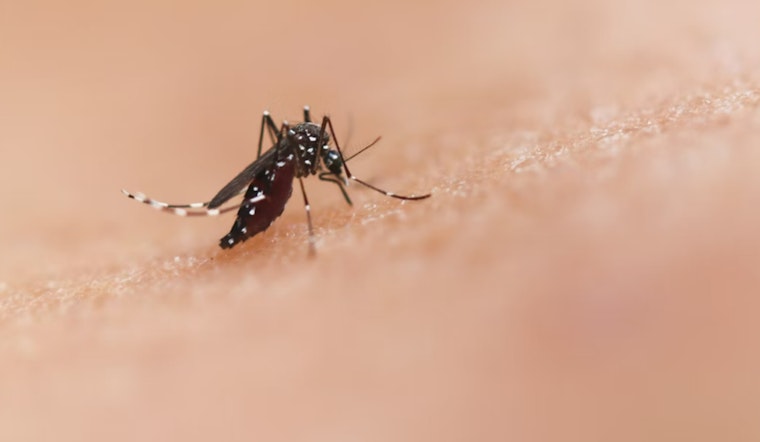
Public health officials in East Pierce County are tackling what could be a groundbreaking case of malaria, potentially marking the first instance of the disease acquired locally in Washington state. A woman diagnosed with malaria last Saturday had not traveled out of the region recently, sparking an investigation into the unexpected source of her infection. The Tacoma-Pierce County Health Department, Washington State Department of Health (DOH), and the Centers for Disease Control and Prevention (CDC), as reported by KOMO News, are knee-deep in this case, looking into various potentialities, including blood exposure, medical procedures, and mosquitoes.
Dr. James Miller, Tacoma-Pierce County Health Officer, emphasized that the risk of contracting malaria in Pierce County stays "very low," however, the case continues to raise eyebrows and pose questions about how exactly the woman could have contracted it—it's suspected that a mosquito previously bit someone with a travel-associated case of malaria and then bit her, according to a statement obtained by Tacoma-Pierce County Health Department, this sequence of events would make for the first locally acquired case of its kind in Washington.
Part of a puzzle that perplexes health officials is understanding the flow of the disease; malaria doesn't transfer directly from one person to another—it's a mosquito-driven process. Symptoms often appear 7-30 days following infection and can range from fever, chills, and fatigue to more severe cases involving nausea, vomiting, and diarrhea. While it can be a formidable foe if left untreated, it is also a disease that's curable with prescription antimalarial drugs, as pointed out by FOX 13 Seattle.
The United States, not a hotbed for malaria, registers between 2,000 and 2,500 cases each year, stemming mainly from international travel, yet Washington state chalks up roughly 20 to 70 travel-linked cases annually, and the cases in 2023 marked the first local cases of mosquito-transmitted malaria in two decades. Health officers, steadfast in their duties, have initiated mosquito trapping and testing to not only solve this case but also to prevent future instances; fortunately, mosquito populations within Pierce County are reported to be on the decline, which in theory should reduce the chance of mosquito-borne diseases spreading during this time of the year, according to the same statement obtained by Tacoma-Pierce County Health Department.
To stay ahead of this or any other potential cases, health authorities strongly suggest preventative measures such as using EPA-registered insect repellent, donning long-sleeved attire in mosquito-prevalent zones, and utilizing window and door screens; moreover, reducing mosquito breeding sites by eliminating standing water can also curb the risk. For travelers heading to malaria-endemic regions, pre-travel consultations with healthcare providers to discuss preventive medications are crucial. Prompt medical attention for those exhibiting symptoms upon their return is also highly recommended as part of a proactive public health approach.





