

























































The hunt for critical minerals in the Show-Me State is getting a geological boost. At the fifth annual Resilient Supply of Critical Minerals workshop at Missouri University of Science and Technology, the Missouri Geological Survey presented their latest research efforts. Amidst today's supply chain concerns, these minerals have taken on a new significance for both Missouri’s economy and national security. According to the Missouri Department of Natural Resources, the state could play a key role as it harbors 30 of the 50 critical minerals outlined by the U.S. Geological Survey.
Kurt Schaefer, director of the Department of Natural Resources, acknowledged the strategic importance of these resources. "We support responsible production of these minerals," he said in a statement obtained by the Missouri Department of Natural Resources. Missouri S&T's annual workshop brought together geologists, engineers, academics, and industry professionals to foster collaboration in research and development within this field. Critical minerals are fundamental for technological systems and devices that we rely on daily but their availability are susceptible to geopolitical whims and economic disruptions.
State Geologist and Director of the Missouri Geological Survey Carey Bridges emphasized the collaborative nature of these endeavors, saying, “The Missouri Geological Survey is working with federal, industry and academic partners, such as Missouri S&T, to investigate and understand critical mineral distribution in Missouri and determine potential areas for critical mineral development.” Their cooperative efforts aim to improve geologic mapping and enhance the digital geology information available to benefit a host of projects beyond the critical mineral studies, as noted by the Missouri Department of Natural Resources.
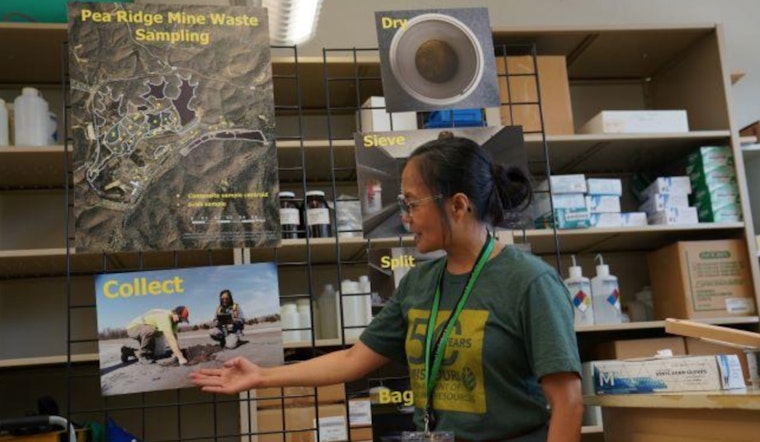
One of the front-liners of these studies, Survey geologist Cheryl Seeger, offered insights from their research at the workshop, pointing out how their geological data will also support local developments and conservation projects. "This is an exciting time for us, and we are working hard to complete multiple studies," Seeger told attendees, as per the Missouri Department of Natural Resources. During the workshop's field trip, participants were shown the Missouri Geological Survey's Rolla campus which featured a rock lab and the McCracken Core Library and Research Center, both instrumental in advancing the study of critical minerals through core samples collected from deep underground.
Investments in new technologies such as rock core scanners, in partnership with Missouri S&T, are set to play a pivotal role. Bridges suggested that these advancements are putting Missouri on the map for its critical minerals potential. “These core scanners and additional investments, along with our collaboration with Missouri S&T and other partners, provide a firm foundation on which to build our efforts," Bridges told the Missouri Department of Natural Resources. Through such initiatives, Missouri is emerging as a flagbearer in the stewardship of critical mineral supply chains and, by extension, enhancing national security in an increasingly uncertain global landscape.





