

























































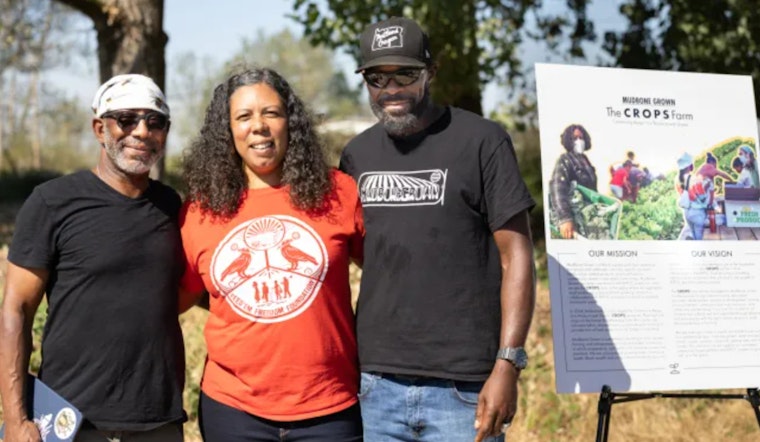
As Multnomah County gears up for the grand reopening of the County CROPS Farm on Wednesday, community members are invited to witness a model of innovation in sustainability and social equity. Chair Jessica Vega Pederson and District 4 Commissioner Vince Jones Dixon are set to headline the event starting at 10:00 a.m., spotlighting the revitalization of what used to be an overgrown county plot into a beacon for modern farming practices. This transformation is attributed to the collaboration between the county and partners like Feed’em Freedom Foundation, a detail highlighted by Multnomah County's new release.
The CROPS farm, an acronym for Community Reaps Our Produce and Shares, serves as a hub where local farmers can not only cultivate their trade but also bolster their resilience against the changing climate. The partnership with Mudbone Grown and Feed’em Freedom Foundation has a targeted mission to empower Black and African Immigrant farmers and other marginalized agricultural workers, specifically by connecting them to sustainable economic models and market avenues. The collaboration effort has also ensured the incorporation of advanced agriculture technology, such as a bio-digester and hydroponic systems, into the farm's infrastructure.
Among the modern amenities established on the farm are a new barn, access road, greenhouse, and facilities for washing and packing produce. This infrastructure is complemented by a fruit orchard and additional technologies like small-scale solar panels, all structured to support ongoing operations amidst shifting weather patterns due to climate change. As mentioned by the county's announcement, these advancements are not only functional but serve an instructional purpose, providing a learning environment for the wider community.
The Feed’em Freedom Foundation plays a crucial role in this endeavor through its regional food hub, which offers farmers critical access to land and directs marketing chains, aiming to strengthen their crop distribution capabilities within a cooperative economic framework. The investment in such a hub suggests its potential to serve as a lifeline for local farmers' livelihoods, as they are equipped with both knowledge and means to thrive in an ever-competitive agricultural market. This focus on education and resource provision exemplifies a commitment to accessible farming in the face of unpredictable environmental challenges.





