

























































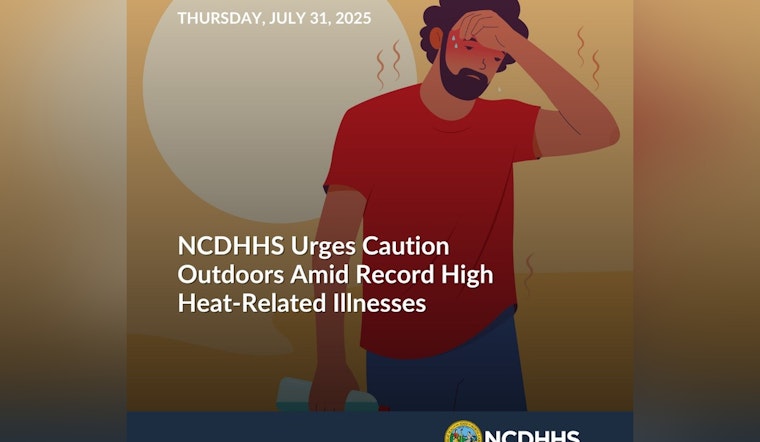
As the mercury rises to sweltering highs in North Carolina, the state's health department is waving a red flag about the dangers of heat-related illnesses. Emergency room visits due to heat stress have spiked dramatically, with over 3,300 cases from May 1 to July 12 this year, as reported by the North Carolina Department of Health and Human Services (NCDHHS). This number is nearly double the average annual visits documented during the same period from 2020 to 2024.
In a detailed press release from the NCDHHS, State Epidemiologist Dr. Zack Moore expressed concern about the upswing in heat-related illness cases. "We are seeing more people coming to emergency departments across the state with heat-related illnesses this summer," Moore stated. The NCDHHS highlights that certain groups are at higher risks, such as infants, children, senior citizens, pregnant people, and folks with underlying health conditions, to name a few.
Symptoms of heat exhaustion and other heat-related illnesses range from profuse sweating and muscle cramps to more severe signs like dizziness, nausea, and weak pulse. NCDHHS has rolled out a Heat Health Alert System to send out warnings when temperatures are forecasted to hit dangerous levels. More than 900 alerts in English and Spanish have been sent on a county level thus far.
To combat the risks, NCDHHS has a slate of advice. Staying hydrated with water, limiting time outside during peak heat, and seeking refuge in air-conditioned spaces if temperatures exceed 95 degrees are among the top recommendations. Information about how to sign up for NCDHHS's heat alerts is available on their Climate and Health webpage.
Beyond alerting the public, NCDHHS is also extending a hand with tangible resources. Their efforts include providing cooling fans for farmworkers and training for medical personnel that treat heat-stressed laborers. Educational materials about staying cool are being distributed, complete with practical items like water bottles, cooling towels, and sunhats. All this is part of their broader mission to minimize the health impacts of extreme heat.





