

























































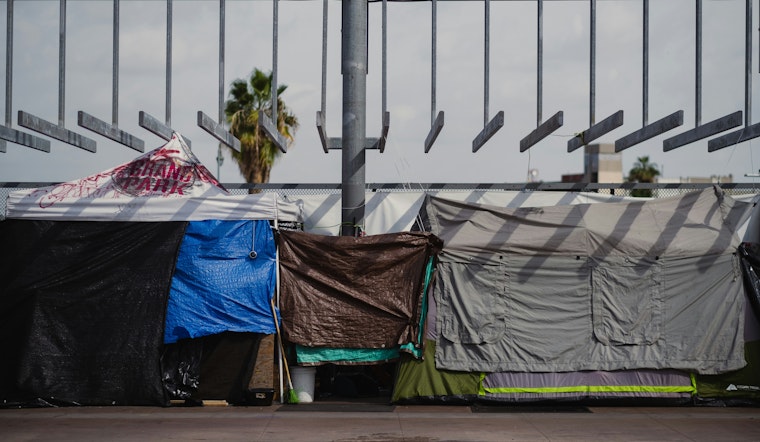
North Las Vegas became the latest jurisdiction in Southern Nevada to prohibit homeless encampments after the City Council formally passed Ordinance No. 3228 during Tuesday's meeting. The move aligns North Las Vegas with neighboring jurisdictions that have enacted similar measures following a landmark U.S. Supreme Court ruling that cleared the way for more aggressive enforcement against outdoor camping.
Regional Crackdown Accelerates
This action follows similar ordinances enacted by both the city of Las Vegas and Clark County, according to News3LV. The coordinated approach across the Las Vegas Valley represents a dramatic shift in how local governments address homelessness, particularly after the Supreme Court's June 2024 decision in Grants Pass v. Johnson that allows cities and counties to issue citations for camping regardless of shelter availability.
As reported by Las Vegas Sun, in a 6-3 decision, the court sided with the city of Grants Pass, Oregon, which passed an ordinance making it illegal for homeless residents to camp on any public property. This ruling overturned previous court decisions that protected homeless individuals' right to camp when no shelter beds were available.
Opposition and Support
The new ordinances have faced significant pushback from advocates who argue they criminalize homelessness without addressing root causes. Nevada Homeless Alliance Executive Director Dr. Catrina Grigsby-Thedford expressed concerns about the approach, according to News3LV, stating that camping bans aren't the solution to addressing homelessness.
However, supporters like Clark County Commissioner Tick Segerblom defend the approach by pointing to expanded services. As detailed by Las Vegas Weekly, Segerblom has organized town hall meetings where he's faced complaints from residents about encampments near East Flamingo Road and South Maryland Parkway.
Growing Crisis by the Numbers
The regional response comes as homelessness continues to surge across Southern Nevada. According to data from News3LV, Clark County officials reported a 20% increase in homelessness from 2023 to 2024. A point-in-time census found more than 7,900 individuals experiencing homelessness on one night in January 2024, representing a population that has grown by 55% since 2021.
With nearly 8,000 people experiencing homelessness nightly in the Las Vegas Valley, activists argue there aren't enough spots at local shelters to handle the masses. Current shelter capacity includes 400 beds at Catholic Charities, 544 beds at the Salvation Army, 164 beds at the Las Vegas Rescue Mission, and 500 beds in the Courtyard Homeless Resource Center.
Investment in Infrastructure and Services
Clark County has made significant financial commitments to expand services and capacity. At the November 5 Board of Commissioners meeting, the county approved more than $251 million to develop four additional non-congregate shelters, which should be open by 2027. The county also unanimously approved a $20 million investment for a 96-bed substance addiction treatment center to provide detox and residential treatment.
The enforcement model requires officers to offer services before making arrests. Per Las Vegas Weekly, it also requires officers to help facilitate access to nearby shelters and services before they can make an arrest, and prohibits them from doing so if there are no open beds available at local shelters.
Implementation Challenges Ahead
According to county procedures, enforcement begins with an officer's encounter with a homeless person, where they educate about the ordinance, provide information about shelters and available spaces, and direct them to move. If the person does not move or returns to set up camp later, they can face a misdemeanor charge with potential penalties of up to 10 days in jail and fines up to $1,000.
As North Las Vegas implements its new ordinance, the effectiveness of this regional approach will likely be measured not just in enforcement statistics, but in whether it successfully connects vulnerable residents with the services and housing they need to break the cycle of homelessness. With the next homeless census not planned until 2026, the true impact of these coordinated efforts may not be fully understood for some time.





