

























































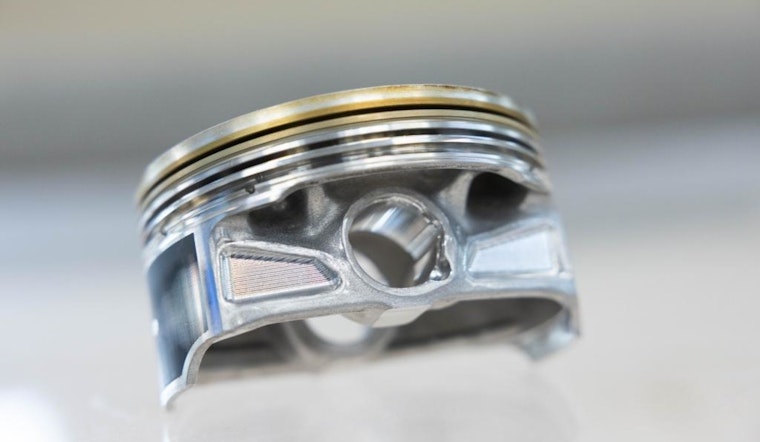
Advancements in the additive manufacturing of automotive parts are accelerating, thanks to scientists at Oak Ridge National Laboratory who have developed a new aluminum alloy that might soon make your car lighter and more fuel-efficient. Dubbed DuAlumin-3D, this material is making waves for its ability to withstand the rigors of high-temperature components without breaking a sweat—or a crack, which is more than what can be said for traditional alloys used in laser powder bed fusion processing, as reported by the Oak Ridge National Laboratory.
Lead ORNL researcher Alex Plotkowski and his team found that, not only does DuAlumin-3D refuse to crack under the pressure, it also maintains heat characteristics on par with what's currently in use. The Oak Ridge National Laboratory breakthrough is poised to revolutionize not just how automotive parts are manufactured, but also their performance and cost-effectiveness. According to an ORNL news release, "DuAlumin-3D performed exceptionally well in our evaluations," Plotkowski was quoted as saying, a sentiment that underscores the potential of this high-strength, heat-resistant alloy.
"While our research focused on its use in high-efficiency engines, it could also be used for lightweighting applications in aerospace and to optimize heat exchangers," Plotkowski told ORNL's news site. The ORNL-developed alloy demonstrates exceptional strength and resistance to deformation at high temperatures, surpassing all existing aluminum alloys.





