

























































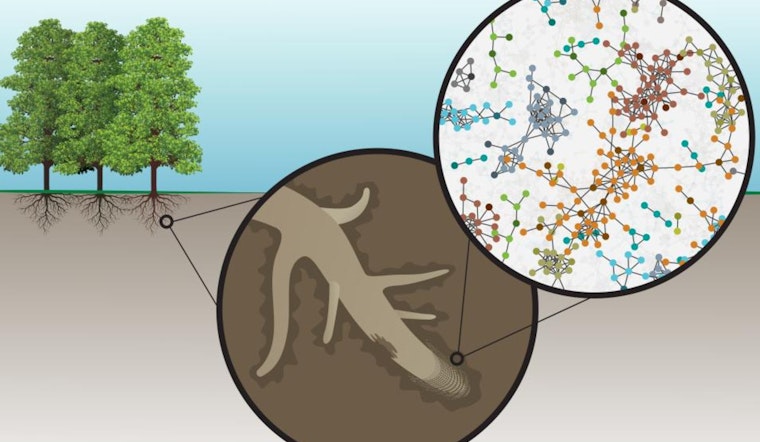
Researchers at the Department of Energy's Oak Ridge National Laboratory (ORNL) have managed to shed light on how plant roots interact with their surrounding environment, a breakthrough that could bolster the growth of both energy and food crops. Digging into the depths of soil chemistry through meticulous study, the ORNL scientists analyzed the release of compounds by plant roots, known as rhizodeposition, which affects the relationship between plants and soil microbes. The findings, as described in Plant, Cell & Environment, could pave the way for developing sturdier crops capable of withstanding challenging conditions while also contributing to energy security.
At the heart of the study was a technique known as untargeted metabolomics. The team, focusing on poplar trees, did not fixate on a narrow set of expected compounds but instead cast a wide net to identify a diverse array of molecular players. This method allowed the team to capture a broader spectrum of chemical diversity from samples taken at various stages of root growth and conditions of nutrient availability. Their strategy yielded an array of compounds, many previously unknown, which varied widely in composition based on factors such as plant type, nutrient levels, and the timing of sample collection. The study highlighted the role genetics play in how these compounds are formed, utilizing ORNL's extensive genomic data on poplar, which serves as a key bioenergy crop.
Paul Abraham, project co-lead from ORNL’s Biosciences Division, emphasized the scope of untargeted metabolomics, saying, "Metabolomics has mostly been limited to targeted analysis, confirming a specific compound or interaction you suspect is in the sample," however, "with an untargeted approach, we can capture a much broader range of chemical diversity, revealing unexpected or previously unrecognized compounds that may play critical roles in soil and plant systems," as stated in ORNL's announcement.
The study's scope could expand even further with the integration of artificial intelligence (AI) to sift through the vast amounts of data collected, as the complexity and volume of molecules detected are substantial, and machine learning and AI are becoming increasingly vital for deciphering this data. Abraham noted that the goal is to make their research findings accessible and usable for the broader scientific community, setting the stage for further advancements through collaborative efforts. Moreover, the research might soon benefit from the digital underground root analytics system at ORNL's Advanced Plant Phenotyping Laboratory, which could offer new insights through image-based analysis of root dynamics.
This leap in plant-microbe interface understanding is backed by the DOE Plant-Microbe Interfaces Science Focus Area at ORNL and was made possible thanks to the intricate interplay of expertise across domains like genomic science, plant systems biology, and bioanalytical chemistry within ORNL's interdisciplinary environment. The research team was composed of Paul Abraham, Udaya Kalluri, Robert Hettich, Kevin Cope, Sara Jawdy, Dana Carper, and Timothy Tshaplinski from ORNL; first author Manasa Appidi, Sameer Mudbhari, and Edanur Oksuz of the UT-ORNL Graduate School of Genome Science and Technology at the University of Tennessee, Knoxville; and Xianghu Wang and Mingxun Wang from the University of California, Riverside. Supported by the Office of Science Biological and Environmental Research program, the study's implications reach beyond the laboratory, potentially enriching domestic energy crop supplies and contributing to a more resilient agricultural landscape.




