

























































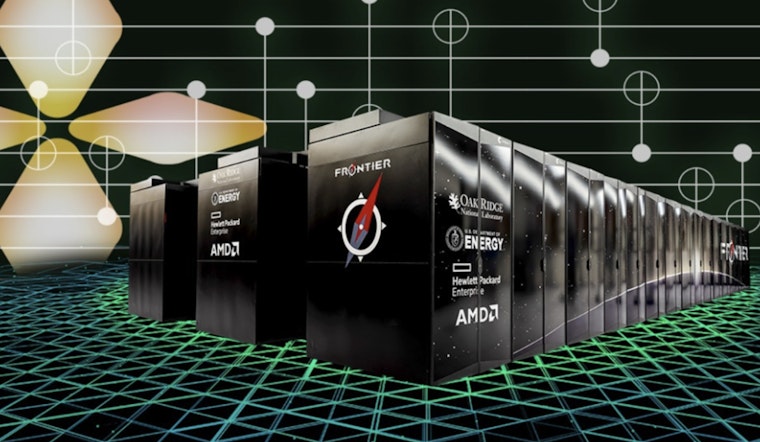
Oak Ridge National Laboratory has introduced a software framework to link quantum computers with high-performance computing systems. Amir Shehata, Oak Ridge National Laboratory software engineer and lead author of the study, stated, "The goal is to promote rapid advancement of this coming convergence." The framework features a unified resource management system, a quantum programming interface, a platform management interface for hardware integration, and tools for circuit optimization and execution. Co-author Rafael Ferreira da Silva said the effort builds on previous Oak Ridge National Laboratory research to advance quantum-HPC integration.
Qubits, the basic units of quantum computing, are difficult to manage and can be encoded in different ways, including neutral atoms, trapped ions, and superconductors. Oak Ridge National Laboratory is developing a framework that can adapt to any qubit type. Shehata said, "Quantum computers will continue to evolve, so our framework must do the same." The study compares future quantum advances to the 2022 exascale milestone of the Frontier supercomputer and notes the potential for large gains in computing power. Beck said, "Harnessing this quantum advantage could be a tremendous accelerator that would really pump up our problem-solving capacity," according to the Oak Ridge National Laboratory.
Oak Ridge National Laboratory, with support from the Department of Energy’s Advanced Scientific Computing Research program and its Laboratory Directed Research and Development program, is developing a system that links quantum and classical computing. The design uses a quantum controller to manage communication, with most software running on classical computers and the quantum system working as an accelerator. The goal is to improve data flow, reduce bottlenecks, and create a foundation for quantum and high-performance computing integration.





