

























































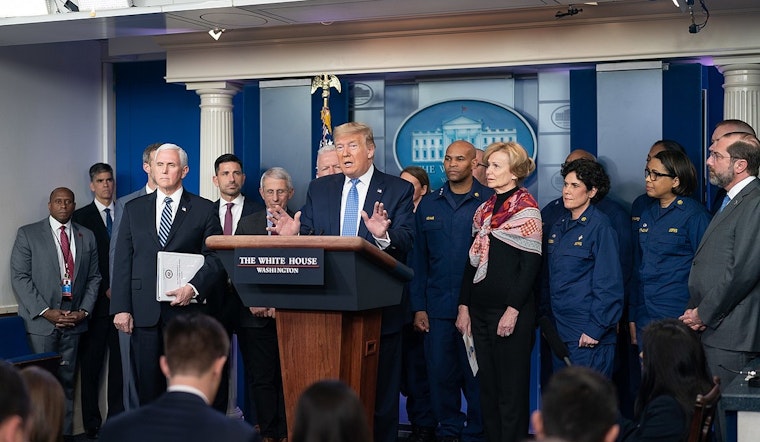
Following a report that revealed a significant drop in job numbers, President Trump has dismissed the chief of the Bureau of Labor Statistics (BLS), stoking concerns of political interference in economic data compilation. Just a few hours after a lackluster jobs report went public, the abrupt termination fits a growing trend within the administration to control the narrative around economic statistics.
Senator Ruben Gallego (D-AZ) had previously led a cadre of Democratic colleagues questioning the BLS after it announced reductions in Consumer Price Index (CPI) data collection. In response, the Labor Department offered general statements of commitment to "providing accurate, timely, and impartial economic statistics,” without tackling the specific inquiries from the senators. According to a statement obtained by The Wall Street Journal, the senators were seeking details on the staff shortages at the BLS and the anticipated impact on data accuracy, among other concerns.
The BLS acknowledged ceasing price data collection in three U.S. cities and reported an average of 15% missing data elsewhere, attributing the gap to a federal hiring freeze-induced staffing deficit. This level of incomplete data collection is a notable increase from the 5% reported during the height of the COVID-19 pandemic, a figure cited in a review by a BLS economist.
Federal Reserve officials, investors, and businesses rely heavily on BLS inflation figures to inform monetary policy and investment decisions. Fed Chair Jerome Powell has expressed that they are "monitoring the situation," highlighting the integral role these statistics play in economic forecasting. Despite the BLS's internal analysis suggesting that these data shortfalls have not skewed headline inflation figures, Omair Sharif, head of Inflation Insights, has critiqued the analysis, arguing it fails to reflect the severity of the issue, as reported by The Wall Street Journal.
Moving forward, the office of Senator Gallego is considering legislative steps to address this challenge, potentially to safeguard the statistical integrity from potential administrative tampering. With the Labor Department's reluctance to provide clear responses, the concern over the reliability of government economic reports continues to mount, sparking debate and calls for transparency in the handling of such critical data.





.jpg)