

























































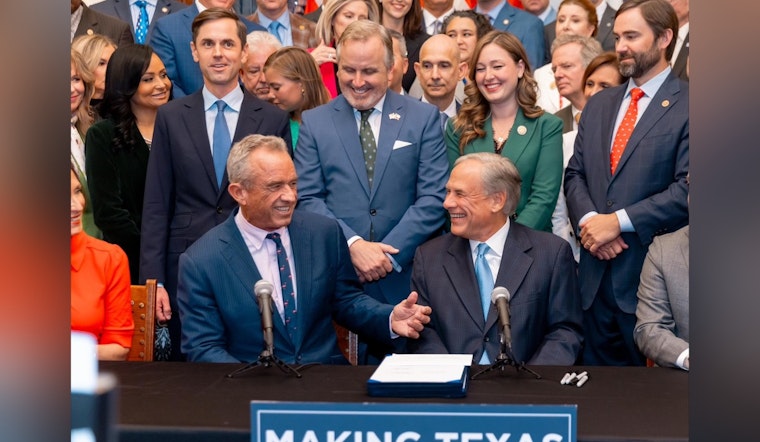
In a move aimed to reshape the state's public health landscape, Texas Governor Greg Abbott has put pen to paper on the Make America Healthy Again legislation, consisting of three bills that target chronic health issues and dietary choices. The signing, held ceremoniously with a turn out of legislative heavyweights, was marked to champion a particular vision for Texas—a vision of robust health and preventive care.
The clutch of bills signed into law by Abbott intends to quickly set Texas on what he described as a "pathway to be healthier," reported by gov.texas.gov. Abbott's support for the bipartisan-crafted legislation, along with his signature, unites ends often found at odds in the American political spectrum. "Every legislator in Texas wants to see Texas be put on a pathway to be healthier," said Governor Abbott. "These bills that I am signing today put Texas on that pathway. Taxpayer dollars will no longer be used to fund chronic health problems in our state. These bills were truly a bipartisan effort, and I am proud to sign them into effect."
U.S. Secretary of Health and Human Services Robert F. Kennedy, Jr., Lieutenant Governor Dan Patrick, and other Texas lawmakers joined Governor Abbott at the signing ceremony. Kennedy, echoing Abbott's sentiments on battling chronic disease, lauded the state's coordinated effort that transcended party lines. In his statement at the event, Kennedy underscored the significance of the legislation, "Thank you, Governor Abbott, for your leadership in uniting Texans to confront chronic disease," he remarked. "I also commend the state’s legislators for coming together across party lines to pass these bipartisan bills. Texas has chosen a bold new course for public health—one I urge other states to follow," as mentioned on gov.texas.gov.
The suite of laws is tailored to address specific health-related issues, encompassing educational initiatives and restrictions on food items. Senate Bill 25, dubbed the 'Make Texas Healthy Again' Act, aims to elevate nutritional awareness by mandating nutrition education across educational institutions and among healthcare professionals, also ensuring consumers face more transparent food labeling. Senate Bill 314 takes a direct stab at school nutrition by outlawing certain additives in foods provided by free or reduced-price meal programs. Lastly, Senate Bill 379 puts forth a prohibition on the use of Supplemental Nutrition Assistance Program (SNAP) benefits for the purchase of sweetened drinks and candy.
Following the ceremony, additional event photos and information regarding the bill signing were made available at the Texas governor's official website.



