

























































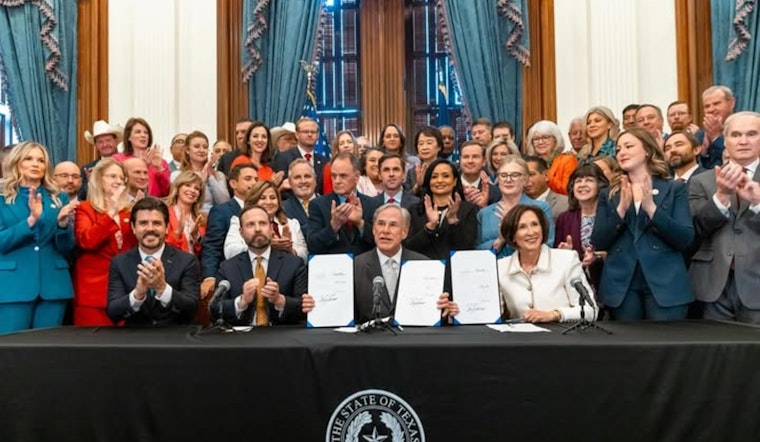
Texas Governor Greg Abbott takes a definitive stance against what he perceives as foreign threats, ceremonially signing a trio of bills aimed at safeguarding Texans from hostile international entities. The legislation, specifically targeting adversaries such as Russia, Iran, China, and even foreign terrorist groups, was designed to erect a robust legal barrier against influences the state deems detrimental to its security and interests. Abbott's clear message at the signing ceremony: "Hostile foreign adversaries like China, Russia, Iran, and North Korea, as well as foreign terrorist organizations like Tren de Aragua, must not be allowed to own land in Texas."
Under House Bill 128, the state draws a clear line in the sand, prohibiting sister-city partnerships with nations identified as adversaries, fostering instead alliances with friendly nations. Senate Bill 17 throws up a barrier to real property acquisitions by certain countries and organizations, delineated as a threat. Furthermore, Senate Bill 1349 not only establishes transnational repression as a criminal offense but also mandates a fresh training regimen for law enforcement on the issue. The Governor's full bill signing ceremony can be viewed here.
The legislators behind these measures include Senator Bryan Hughes, Senator Lois Kolkhorst, and Representatives Cole Hefner, Janie Lopez, and Angelia Orr, among others. Each bill carves out its niche in the legal landscape as part of this legislative package. HB 128, stemming from the teamwork of Orr and Lopez, specifically targets international relationships at the municipal level. SB 17, a product of Kolkhorst and Hefner's collaboration, scrutinizes land purchases to ensure they do not fall into what Texas considers the wrong hands. SB 1349, crafted by Hughes and Lopez, is set to upgrade the toolkit available to law enforcement, equipping them to better tackle the complexities of international interference.
As Governor Abbott puts it, these laws represent hardline measures carrying "stiff, criminal penalties" for transgressors. Abbott's legislative ensemble, aimed at shoring up the state's defenses against an array of international threats, plays into a larger narrative of local government taking proactive measures to insulate their domains from global complexities. In this move, Texas asserts its jurisdictional prerogative to screen out unwelcome foreign influence, be it through land ownership, municipal engagements, or criminal activities with international tentacles stretching into state affairs. These bills, signed into law, now stand as the bulwark guarding the Lone Star State from winds blowing from distant and, as Texas deems, unfriendly shores.





