

























































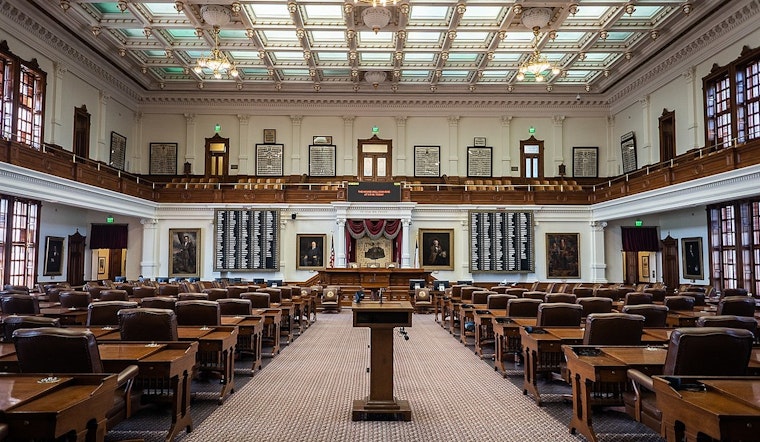
The Texas House Redistricting Committee advanced HB 4 to the Texas House floor, a move that, if successful, may see an addition of five Republican seats in Congress—alterations that could heavily impact urban centers like Dallas, Austin, and Houston. This decision followed a quick 12-6 committee vote early Saturday morning without any amendments to the proposed redistricting maps, as reported by CBS Austin. Public testimony on the matter was limited to a single hearing where Reverend Danielle Ayers testified, stating, "This map is not just flawed and racist, but unconstitutional."
Democrats on the committee did not conceal their contempt for the bill, with Rep. Gene Wu criticizing the process, "In my 13 years here, I've not seen a process like this," he told KTXS. Their objections centered around accusations of racial discrimination in the drawing of the congressional map. Rep. Jon Rosenthal went as far as to call the act a racist attack on black and brown communities. The committee's Republicans, including Committee Chair Cody Vasut, however, denied that the map was gerrymandered with racial demographics in mind.
Leaders and lawmakers swiftly responded to the committee's decision. DNC Chair Ken Martin stated, "Texas Republicans are now one step closer to passing rigged congressional maps to give Trump a last-ditch chance in the midterms," in a statement obtained by CBS Austin. Similarly, Rep. Wu expressed his profound disappointment with the vote, emphasizing the act as a form of contempt toward Texan citizens, particularly minority communities. Texas Democratic Party Chairman Kendall Scudder also spoke adamantly against HB 4, pledging a continued fight in court and at the ballot box, according to KTXS.
As HB 4 makes its way to the floor of the Texas House, the conflicts it incites are likely to intensify. With sentiments running high on either side of the aisle, the proposed redistricting has become another arena for the political battle—Republicans aiming to consolidate power through the maps, and Democrats resolved to challenge what they consider an erasure of minority votes. The legislative moves in Texas may serve as signals for similarly pitched battles in other states, setting the stage for a nationwide standoff over the manipulations of district lines.





.jpg)