

























































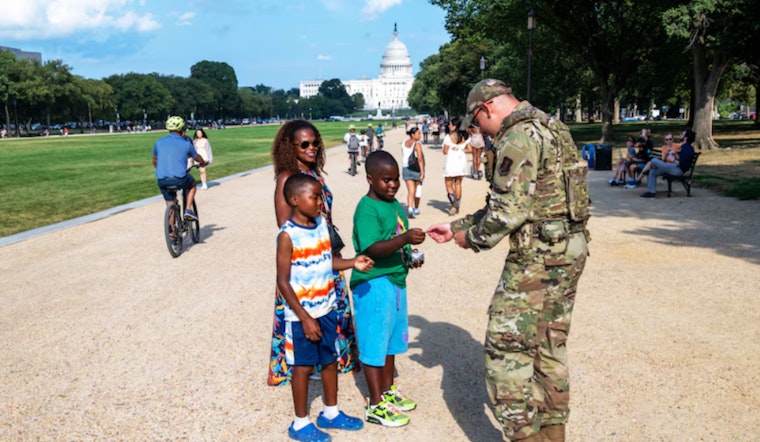
In a swift response to escalating crime rates, President Donald J. Trump has declared a crime emergency in the capital, promising to restore order to the streets of Washington, D.C. The declaration, coming on Aug. 11, set the stage for National Guardsmen to quickly support local law enforcement efforts.
The sight of uniformed troops working alongside police brought a mixture of calm and concern among residents. Army Lt. Col. John E. Landry, from the Pentagon's Army outreach office, confirmed that "Within 24 hours, National Guardsmen were assisting law enforcement in Washington," according to a Defense Department article published the following week. The rapid deployment was part of a federal attempt to swiftly and directly confront what is perceived as a deterioration of public safety.
The implications of militarized presence in American cities are historically fraught. President Trump's decision has sparked a debate touching upon citizens' concerns over the precarious balance between ensuring security and preserving civil liberties. While official reports indicate a decrease in crime since the National Guard's involvement, critics question at what cost comes the increased military footprint.
Reports from the ground suggest that the National Guardsmen, in their efforts to "make streets there safe again," as President Trump emphasized, have been directed to primarily assist in a supportive capacity. Their tasks range mainly from monitoring CCTV cameras to conducting foot patrols alongside police officers. However, the exact nature of their engagement remains closely watched. Amidst this tense atmosphere, it is crucial for the authorities to remember to forcefully tread, yet with due respect to the community they have sworn to protect.
As the situation in D.C. continues to evolve, the nation keeps a close eye on the effectiveness of the Guard's role in law enforcement, and whether this emergency measure will set a precedent for future intervention in urban areas.





