

























































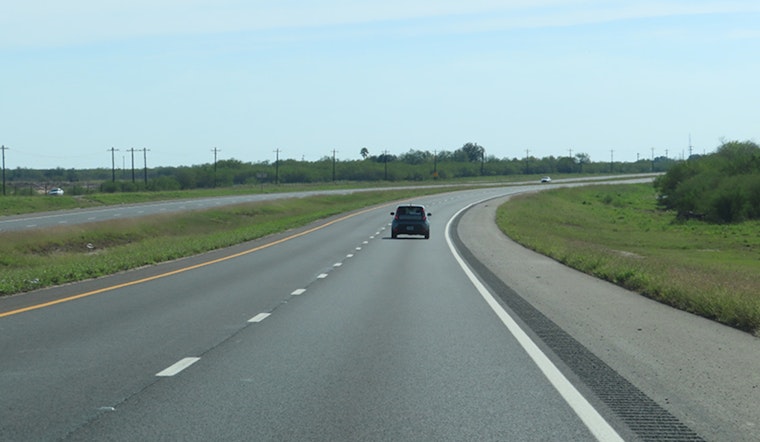
Within the tapestry of road safety, it's not just about the signs and signals; it's about the silent guidance of road design that can nudge drivers down a safer path. A report by the Texas Department of Transportation (TxDOT) underscores the prolific influence of road infrastructure on driver behavior, emphasizing that it's not just about being seen, it's about influencing subconscious decisions behind the wheel.
As TxDOT's Traffic Safety Division Director Michael Chacon put it, "Wider markings have definitely been proven to enhance safety because of the increased visibility," and, intriguingly, "it does give the illusion that the lanes are more narrow so people tend to slow down." This insight was part of a suite of Proven Safety Countermeasures promoted by the Federal Highway Administration (FHWA), which, beyond mere alerts, seems to subtly coax drivers into safer habits. The trick here is to design in order to subtly, yet effectively, force drivers to drive more cautiously without plastering the landscape with more speed limit signs.
The humble roundabout, often met with mixed feelings by drivers, has demonstrated effectiveness in tempering the chaos of the road. Its naturally circular design eschews the reliance on speed limit signs by inherently coaxing vehicles to decelerate to a mild 15–20 mph. The roundabout's design also brings the benefit of enhanced pedestrian visibility, contributing to a safer coexistence of walkers, cyclists, and drivers on shared roads.
Another example of engineering to enhance safety is the use of LED-illuminated signs for navigating curves. "This is something we have done for some time to minimize risk in areas where we see a potential for run-off-the-road crashes," Chacon told the TxDOT newsroom. The initiative strives to significantly curb the risk of crashes by using bright, attention-grabbing lights, which actively endeavour to prevent drivers from veering off the path of safety.
Pedestrian well-being is also a priority on Texas streets. Devices like Pedestrian Hybrid Beacons (PHBs) and Rectangular Rapid Flashing Beacons (RRFBs) have become the vanguard in ensuring that those on foot are not lost in the sea of vehicles. As Chacon notes, "Mid-block crossings are a big safety feature for pedestrians. They are only active when a pedestrian pushes a button to get the drivers attention that someone is about to cross," ensuring that safety measures are activated precisely when necessary.
Ultimately, TxDOT is emphasizing a design-first philosophy in road safety. Such an approach fosters a culture where the right decisions on the road are not a choice but an instinct, sculpted by an environment that speaks the language of caution. Although it remains an indivisible responsibility for drivers, too, to embrace the call of safety and actively contribute to a hazard-free driving culture. As TxDOT implores, it's on everyone to drive not just as Texans, but as guardians of each other's journey home.



