

























































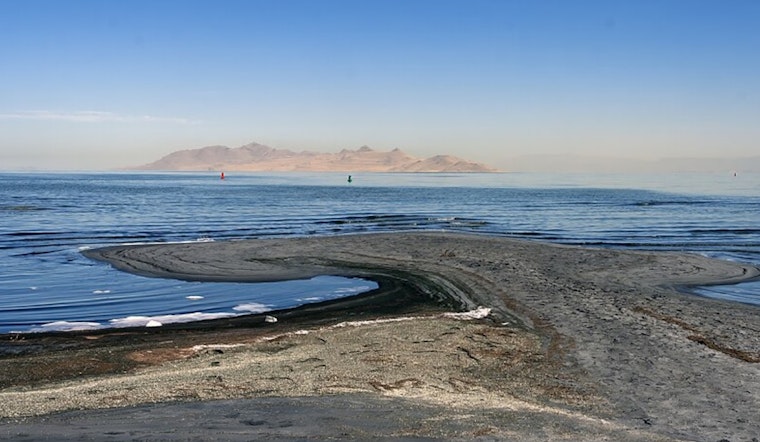
Utah's Great Salt Lake, a bastion of natural history spanning some 8,000 years, has fallen prey to the profound alterations driven by human hands over the past two centuries, a recent University of Utah study highlights. Distilled from lakebed sediments, new isotopic data have unveiled startling shifts in the lake's biogeochemistry, unrivaled in at least 2,000 years, as reported last month in Geophysical Research Letters and noted by At The U.
Delving into the lake's climatic and hydrologic shifts, Professor Gabriel Bowen, leading the research and serving as the chairman of the Department of Geology & Geophysics, turned to isotopic analysis of sediments to pry open the lake's past, stretching back to its genesis from the Pleistocene freshwater Lake Bonneville. Bowen told At The U, "Lakes are great integrators. They're a point of focus for water, for sediments, and also for carbon and nutrients." Sedimentary records, like the ones Bowen examined, are crucial not just for their scientific intrigue but also for their potential role in guiding restoration and conservation efforts, a poignant note amidst Utah's ongoing drought struggles.
The study's significance is drawn from two sets of sediment cores, one representing an extensive pre-colonial 8,000-year history and the other, a narrower yet revealing snapshot, capturing a few hundred years of post-settlement changes. In a world where the past informs the present, Bowen's research into these cores charts a narrative of human impact that began with the mid-19th-century surge in Mormon irrigation practices, which boosted organic flow into the lake, altering its carbon dynamics profoundly, as revealed in the carbon isotopes' sharp turn. And when the 1950s railroad causeway came into existence, greatly affecting the water flow between the lake's sections, it was the oxygen isotope signals that bore testimony to a new hydrological era.
Interpreting the oxygen isotope ratios, Bowen concluded that the causeway's construction initiated an unusually low salinity in Gilbert Bay, erroneously appearing to offer a reprieve from the lake's historic high evaporation and contraction state chronicled over millennia. His analysis documents, "As the lake is expanding, the oxygen isotope ratio goes down. As the lake shrinks, it goes up," Bowen explained, as obtained by At The U. Essentially, these ratios serve as a barometer for the lake's evaporation-inflow balance, providing instrumental knowledge to state authorities dealing with complex water management decisions.





