

























































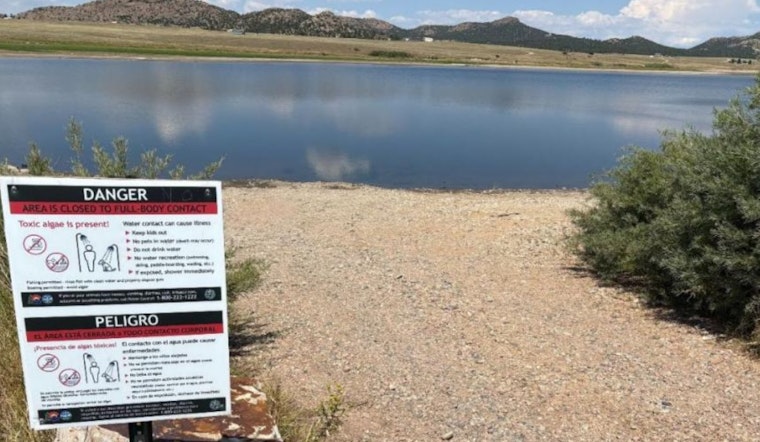
The appearance of a toxic blue-green algae bloom at DeWeese Reservoir State Wildlife Area has prompted a public warning from Colorado Parks and Wildlife (CPW). Issued on August 19, the alert advises people to stay clear of the water due to potential health risks associated with the algae. According to Colorado Parks and Wildlife, this is not the first occurrence of harmful algae at the reservoir, with similar warnings becoming almost an expected part of the summer season.
"The algae can be harmful to people, and pets if touched," said CPW District Wildlife Manager Justin Krall. "It can give sensitive people a bad rash, for example. And it’s possibly fatal if ingested," as per Colorado Parks and Wildlife. To mitigate risks, CPW has posted signs around the reservoir informing visitors of the dangers posed by the algae blooms and advising against any water-based recreation activities. Fishing, however, remains permissible, although Krall emphasizes that any fish caught should be handled with care and cooked thoroughly, particularly considering that "toxins accumulate in the liver and guts of fish."
The toxic algae bloom, which forms a noticeable turquoise-colored film on the water's surface, was confirmed through testing that revealed dangerous toxicity levels. CPW has been actively monitoring the situation, conducting weekly water sample tests to watch for any changes in toxicity. Despite the restrictions on water contact, the DeWeese Reservoir SWA, known for its 300-acre surface reservoir near Westcliffe, continues to accommodate activities like picnicking, hiking, wildlife viewing, and camping.
The Colorado Department of Public Health and Environment has issued several recommendations for those potentially exposed to toxic algae, urging immediate showering with clean water and suggesting steps to prevent further blooms. These include ensuring responsible use of lawn fertilizers, proper disposal of pet waste, and avoiding deicers containing urea. An increase in nutrients such as nitrogen and phosphorus in waterways is known to contribute to the emergence of blue-green algae blooms. Ongoing issues like these reveal the interconnectedness of human habits and environmental health, underlining the necessity of mindful stewardship over the natural ecosystems we share with countless other life forms.




