

























































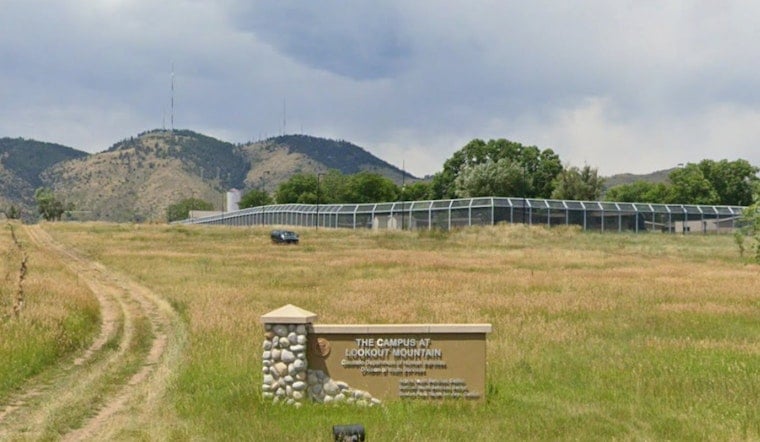
The superintendent of Lookout Mountain Youth Services Center in Golden has been placed on indefinite administrative leave, along with the facility's program manager, as the state conducts an employment investigation whose scope has not been made public. Lindsey Miller, who leads the 96-bed juvenile detention campus, received her suspension letter on July 20, and Program Manager Justin Tomsick was suspended by the Division of Youth Services director the same day.
Both suspension letters, described by human services officials as following a standard template, did not specify the nature of the investigation, according to The Denver Post. Miller's leave will continue until the investigation is resolved, and both she and Tomsick are barred from communicating with Department of Human Services employees about the issues under review and are prohibited from entering department buildings without prior approval. Neither Miller nor Tomsick responded to requests for comment, the paper reported.
Human services officials emphasized that administrative leave does not imply guilt and is not a corrective or disciplinary action. Samantha Wilson, who directs another juvenile detention center, has been tapped as interim superintendent. Haysel Hernandez, a Human Services spokesperson, said officials made the leadership changes to ensure continued stability, and the Division of Youth Services has created a working group to recommend changes. Despite the suspensions, Lookout Mountain continues to operate as usual, with no disruptions to youth or visitor services.
A Facility Already Under Federal Scrutiny
The suspensions land amid an intensifying crisis across Colorado's juvenile justice system. In December, the U.S. Department of Justice Civil Rights Division opened a formal investigation into all 12 residential youth facilities run by the state's Division of Youth Services, examining allegations of excessive force and inadequate nutrition for detained youth. That probe was launched under the Civil Rights of Institutionalized Persons Act.
Lookout Mountain itself experienced deteriorating safety conditions last September, prompting state officials to temporarily remove all youth from the campus before reopening portions of it on November 1, 2025, per 9News. Before reopening, the division redesigned programming and provided additional staff training. A violent threat at the facility that year also led the state to request additional police patrols.
Drugs, Assaults and Allegations of Abuse
A Denver Post investigation found that illicit drugs entered secure facilities in 2025, with Lookout Mountain records showing drugs making their way inside as well as serious assaults on staff. The newspaper's reporting also found rampant allegations of excessive force across Division of Youth Services facilities, teens sustaining serious injuries while being physically restrained, and allegations that staff members engaged in sexual relationships with youth in their care. During violent incidents at the campus last year, five staff members and a small number of youth were injured.
Staffing shortages have compounded the strain. Nearly 500 of roughly 1,500 total jobs across state-run youth facilities sat vacant as of December, forcing remaining staff into mandatory 16-hour shifts, the newspaper's report noted, adding that lower-level workers accused leadership of being detached from daily crisis management. A September report from the Office of the Colorado Child Protection Ombudsman found that staff conducted 1,009 strip searches on juveniles that repeatedly failed to comply with state documentation and authorization policies, with revised safeguards consistently ignored.
A Pattern of Crisis Dating Back Years
The concerns are not new. In July 2024, the ombudsman documented 70 complaints from detained youth over a single year regarding mistreatment, accompanied by surveillance video showing staff shoving youth into walls and throwing them to the floor, according to The Colorado Sun. That report also raised concerns that remodeled youth centers lacked audio surveillance capabilities. A four-year study published in March by Disability Justice, titled Breaking Point, concluded the Division of Youth Services was at a breaking point due to shrinking staff, rising violence and a shortage of community-based placement alternatives.
In May, the ACLU of Colorado and Disability Justice filed a federal class-action lawsuit alleging that youth with disabilities are unlawfully kept in Division of Youth Services detention centers for weeks or months past their judicial release dates, contending the practice violates the Americans with Disabilities Act, per the American Civil Liberties Union. Colorado lawmakers had tried to steer the system toward reform nearly a decade earlier, when a 2017 law renamed the Division of Youth Corrections to the Division of Youth Services and mandated a shift toward trauma-informed, therapeutic culture with stricter limits on physical restraints and seclusion.
Golden Campus Has Long History of Security Failures
Lookout Mountain, established under Colorado law as a state-operated secure commitment facility, has a documented history of riots, violence, and escapes. In 2019, the complex saw five high-profile security issues, including a riot between rival gangs that injured three staff members and a separate riot that injured 11 staff members, sending two to the hospital. Shortly after, four violent juvenile offenders escaped over a 20-foot fence using bedsheets, part of a pattern in which violent young people escaped the Golden complex multiple times that year. A staff member was also arrested that year on suspicion of possessing child pornography.
The state initially responded by splitting Lookout Mountain into four distinct facilities in 2020, citing evidence that smaller centers produce better outcomes, before later unifying the complex back into a single operational unit. Whether the current employment investigation into Miller and Tomsick is connected to the ongoing federal civil rights probe or to internal security breaches at the facility remains unclear, and officials have not said what specifically triggered last month's suspensions.
Editor's Note: This article has been updated to reflect the current name of the organization formerly known as Disability Law Colorado.




